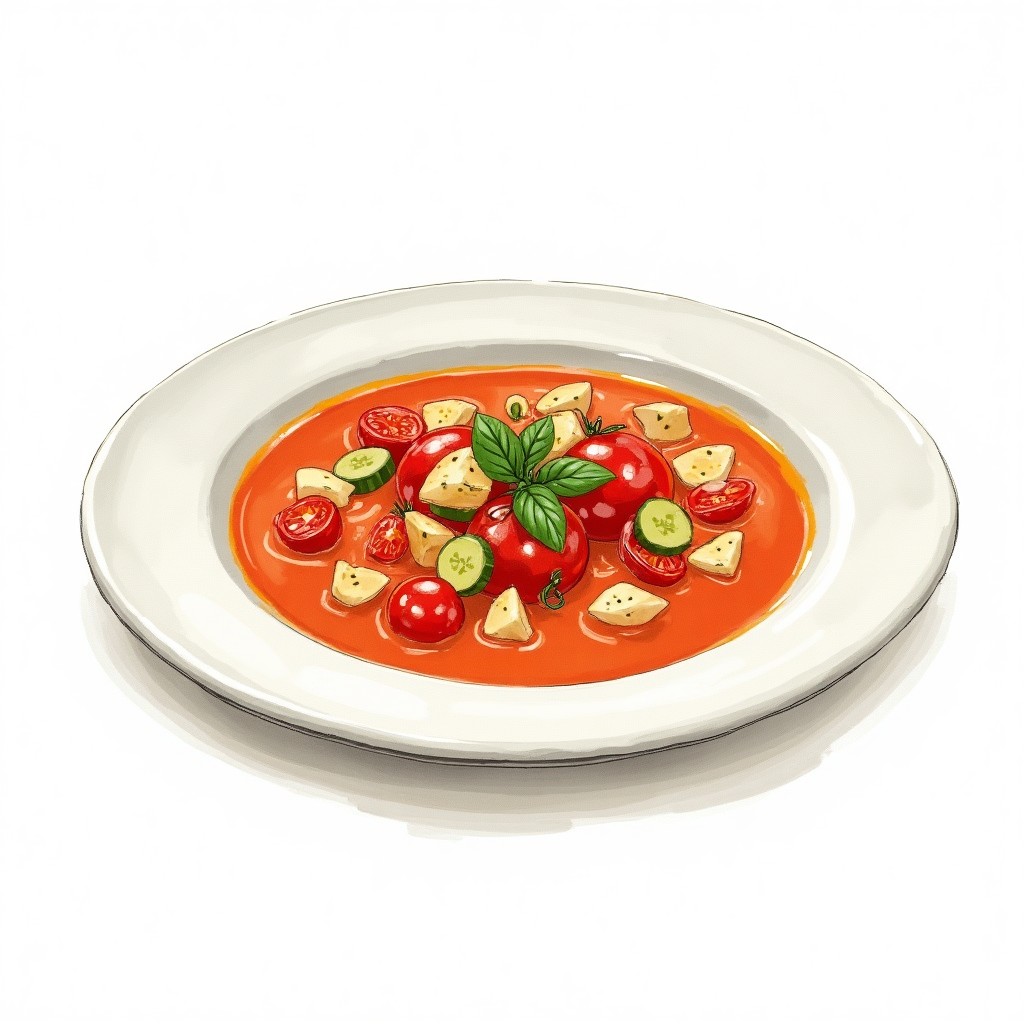
Classic Gazpacho
Traditional Andalusian Gazpacho with Garden Vegetables
This cold soup captures Andalusian summers in a bowl — peak tomatoes and crisp vegetables get transformed into liquid velvet with just bread, good olive oil, and time. It's the kind of dish that makes you understand why simplicity wins every time.
August in Andalusia teaches you things about heat that air conditioning never could. When the sun turns everything white-hot by noon, the locals retreat indoors with bowls of gazpacho — a soup so refreshing it feels like diving into cool water. This isn't just food; it's survival strategy perfected over centuries.
The genius lies in what doesn't happen: no cooking, no heat added to an already scorching day. Instead, peak-season vegetables surrender their essence to time and technique. The bread isn't filler — it's the secret that transforms a chunky salad into liquid silk, binding everything into something greater than its parts. Spanish cooks have been proving that the best dishes often require the least fire.
What makes this version sing is restraint. Too many gazpacho recipes pile on ingredients like they're building a salad in a blender. But traditional Andalusian gazpacho keeps the cast small and lets each player shine. The tomatoes carry the melody, the cucumber adds its cool counterpoint, and the bread creates the foundation that holds it all together. When you nail the balance, you understand why this simple soup has fed southern Spain through countless summers.
Nutrition
Ingredients
- 2 lbripe tomatoes, cored and chopped (the redder and softer, the better)
- 1 mediummedium cucumber, peeled and chopped
- 1 mediummedium red bell pepper, seeded and chopped
- 1 smallsmall red onion, chopped (sweet onion works too)
- 2 clovegarlic cloves, minced
- 2 sliceday-old bread slices, crusts removed (country-style or sourdough preferred)
- 3 tbspextra-virgin olive oil, the good stuff
- 2 tbspsherry vinegar (or red wine vinegar if needed)
- 1 tspsalt
- ¼ tspfreshly ground black pepper
- ½ cupcold water
Instructions
- Drop the bread into a bowl with the cold water and let it soak for 5 minutes until completely saturated. Then squeeze it firmly in your hands to remove most of the liquid — you want it damp but not dripping. This soaked bread is what gives gazpacho its signature body.⏱ 5 min
- Pile the chopped tomatoes, cucumber, bell pepper, onion, and minced garlic into your food processor. Don't worry about making the pieces uniform — they're all getting blended anyway.
- Add the squeezed bread to the vegetables, then pour in the olive oil, vinegar, salt, and pepper. The bread should break apart as you add it, which is exactly what you want.
- Pulse a few times to break everything down, then let the processor run continuously for about 2 minutes until the mixture is completely smooth. Stop once to scrape down the sides if needed.⏱ 2 min
- With the processor running, slowly drizzle in the cold water until you reach your preferred consistency. Some like it thick enough to coat a spoon, others prefer it more pourable — your call.
- For restaurant-smooth gazpacho, push the mixture through a fine-mesh sieve, pressing the solids with the back of a spoon. Skip this step if you like a bit of texture — both ways are traditional.
- Cover and refrigerate for at least 2 hours, though overnight is even better. Cold soup needs proper chilling time to let the flavors meld and the temperature drop all the way through.⏱ 2 hrs
- Before serving, taste and adjust with more salt, pepper, or a splash of vinegar. Cold foods need more seasoning than hot ones, so don't be shy — the flavors should be bright and balanced.
Tips & Tricks
- Use only the ripest tomatoes you can find — their flavor carries the entire soup, so bland winter tomatoes will give you bland gazpacho.
- The bread needs to be day-old and sturdy enough to hold its structure when soaked; fresh bread turns to mush and won't provide the right body.
- Taste after chilling and adjust the seasoning generously — cold soup mutes flavors, so what tastes perfect at room temperature will seem flat when ice-cold.
- For silky-smooth texture, strain through a fine-mesh sieve, but don't feel obligated — many Spanish families prefer it with a bit of texture.
- Make it a day ahead if possible; the flavors deepen and marry overnight in ways that can't be rushed.
Frequently Asked Questions
Can I make this without a food processor?
A high-powered blender works perfectly, though you may need to work in batches. A regular blender will struggle with the thick mixture, so add extra water gradually to help it along.
What if I can't find sherry vinegar?
Red wine vinegar works well, or use white wine vinegar with a pinch of sugar. Avoid balsamic — its sweetness throws off the bright, clean flavor profile.
How long does gazpacho keep in the refrigerator?
It stays fresh for 3-4 days, though the flavors are best within the first two days. Give it a stir before serving since separation is natural.
Why does my gazpacho taste watery?
Either your tomatoes weren't flavorful enough, or you added too much water. Next time, use less liquid and add more salt — it brightens all the other flavors.
Can I freeze leftover gazpacho?
Freezing changes the texture significantly, making it grainy when thawed. It's better to make smaller batches since it comes together so quickly.