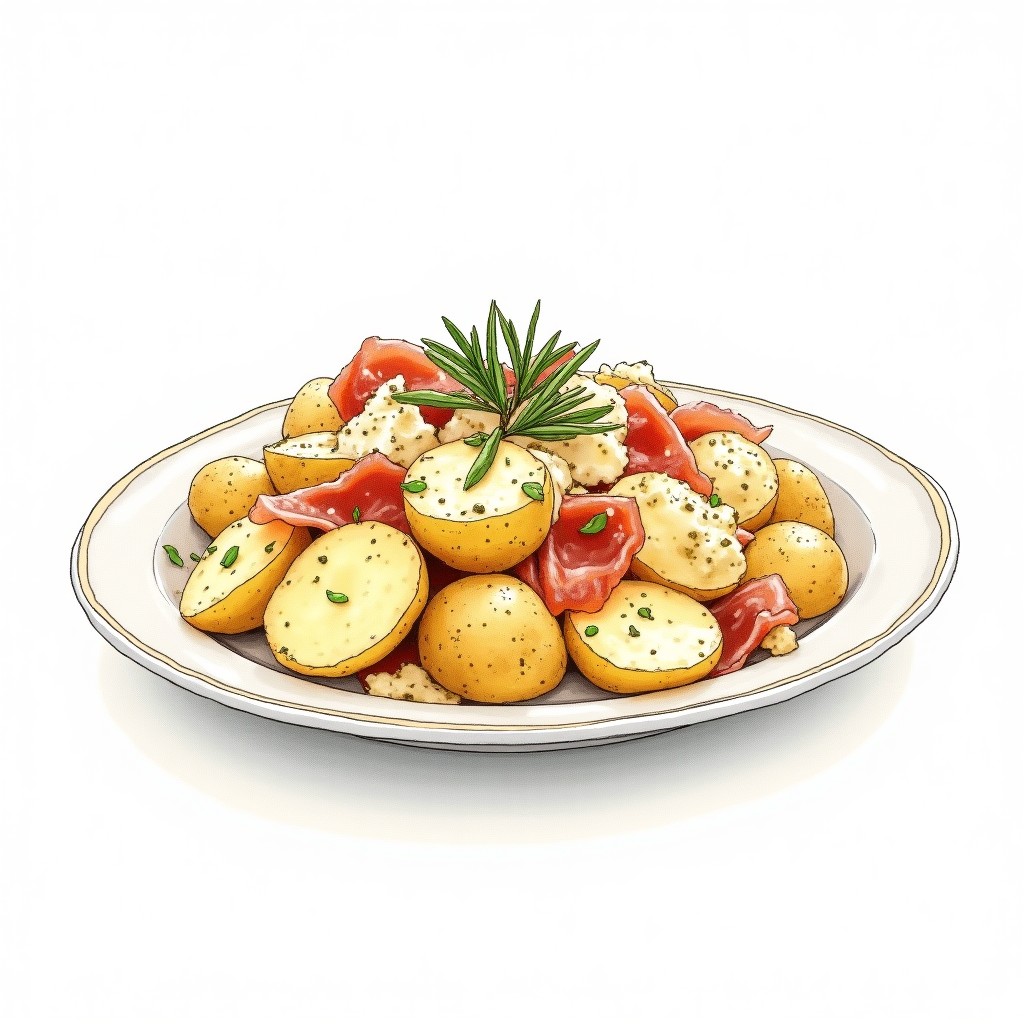
Classic French Tartiflette
Alpine Tartiflette — French Comfort Food Worth the Melted Cheese Coma
Born in the ski chalets of Savoy, tartiflette is what happens when French mountain cooks take potatoes, bacon, and gloriously funky reblochon cheese and layer them into pure comfort. The creamy, gooey result is rich enough to fuel a day on the slopes — or a cozy evening at home.
When Savoyard cooks first layered potatoes with bacon and reblochon cheese in their mountain kitchens, they probably had no idea they were creating one of France's most beloved comfort foods. Tartiflette emerged from the Alps as practical fuel for hard-working mountain folk, but it's evolved into something much more — a dish that transforms simple ingredients into something that feels like a warm hug after a long day.
The secret lies in reblochon cheese, a creamy, washed-rind cheese that melts into luxurious pools while maintaining just enough funk to keep things interesting. This isn't a subtle dish — it's unapologetically rich, with layers of tender potatoes soaking up bacon fat and cream until every bite delivers maximum comfort. The wine adds a bright note that cuts through all that richness, while the slow-cooked onions provide sweetness that balances the cheese's intensity.
What makes tartiflette special is how it manages to feel both rustic and refined. The technique is straightforward enough for a weeknight dinner, but the final result looks impressive enough for company. Just don't plan any strenuous activities afterward — this is the kind of meal that demands you settle in with a glass of wine and embrace the satisfying heaviness that comes with truly great comfort food.
Nutrition
Ingredients
- 2 lbwaxy potatoes (like Yukon Gold), peeled and sliced 1/4 inch thick
- 8 ozthick-cut bacon, diced
- 2 mediummedium yellow onions, thinly sliced
- 3 clovegarlic cloves, minced
- ½ cupdry white wine (something you'd drink)
- ¾ cupheavy cream
- 1 whole reblochon cheese, rind removed and sliced
- salt and black pepper to taste
- 2 tbspfresh thyme leaves(optional)
Instructions
- Get your oven going at 375°F and generously butter a 9x13 inch baking dish. The butter prevents sticking and adds another layer of richness to this already indulgent dish.
- Drop the sliced potatoes into a large pot of well-salted boiling water and cook until they're just tender when pierced with a fork — about 12 minutes. You want them cooked through but still holding their shape since they'll finish cooking in the oven.⏱ 12 min
- Drain the potatoes thoroughly and spread them on a clean kitchen towel to cool slightly. Getting excess moisture off now prevents a watery finished dish.
- Cook the diced bacon in a large skillet over medium heat, stirring occasionally, until it's crispy and has rendered plenty of fat — about 8 minutes. Listen for that satisfying sizzle that tells you it's working.⏱ 8 min
- Use a slotted spoon to transfer the crispy bacon to a paper towel-lined plate, but leave all that rendered fat in the pan. That's liquid gold for cooking the onions.
- Add the sliced onions to the bacon fat and cook over medium heat, stirring occasionally, until they're golden brown and sweet — about 10 minutes. The bacon fat gives them incredible flavor, so don't rush this step.⏱ 10 min
- Stir in the minced garlic and cook just until fragrant — about 1 minute. Garlic can turn bitter if it browns, so keep it moving in the pan.⏱ 1 min
- Pour in the white wine and let it simmer until it reduces by half — about 3 minutes. The alcohol will cook off, leaving behind concentrated flavor that brightens the whole dish.⏱ 3 min
- Stir in the heavy cream and season generously with salt and pepper. Taste and adjust — this creamy mixture should be well-seasoned since it's coating all those potatoes.
- Arrange half the potatoes in your prepared baking dish, overlapping them slightly. Top with half the creamy onion mixture and half the crispy bacon, distributing everything evenly.
- Repeat the layers with the remaining potatoes, onion mixture, and bacon. Press down gently to compact the layers — this helps everything meld together as it bakes.
- Arrange the reblochon slices over the top, covering as much surface as possible. Sprinkle with fresh thyme if you're using it — the herbal note cuts through all that richness beautifully.
- Slide into the oven and bake until the top is golden brown and the edges are bubbling enthusiastically — about 25 minutes. The cheese should be melted and starting to caramelize in spots.⏱ 25 min
- Let the tartiflette rest for 5 minutes before serving. This brief pause allows the layers to set up slightly, making it easier to serve and preventing molten cheese burns.⏱ 5 min
Tips & Tricks
- Use waxy potatoes like Yukon Gold or fingerlings — they hold their shape better during the double cooking process and won't turn mushy in the oven.
- If you can't find reblochon, substitute with camembert or brie, but remove the rind completely as it won't melt as smoothly as reblochon's thinner rind.
- Save time by cooking the bacon and onions while the potatoes boil — just keep the rendered fat warm so it doesn't solidify before adding the onions.
- Press the layers down gently with a spatula before adding the cheese — this creates better contact between ingredients and prevents air pockets that can make serving messy.
- The dish is ready when you can insert a knife into the center and it slides through easily with no resistance from the potatoes.
Frequently Asked Questions
Can I make tartiflette ahead of time?
Assemble the dish completely but don't bake it — cover tightly and refrigerate up to 24 hours. Add an extra 10-15 minutes to the baking time since it's starting cold, and let it come to room temperature for 30 minutes before baking for more even heating.
What can I use instead of reblochon cheese?
Camembert or brie work well, though they're milder than reblochon. For something closer to the original's funk, try Taleggio or even a soft goat cheese. Remove all rinds except reblochon's, which is meant to melt.
Why did my tartiflette turn out watery?
Usually this happens when the potatoes aren't drained well enough after boiling, or if the wine doesn't reduce properly in step 8. Make sure to pat the potatoes dry and let that wine simmer until it's noticeably thicker.
Can I freeze leftover tartiflette?
Freezing changes the texture significantly — the potatoes become grainy and the cheese separates when reheated. It's best enjoyed fresh, though leftovers keep well in the fridge for 3-4 days and reheat nicely in a low oven.