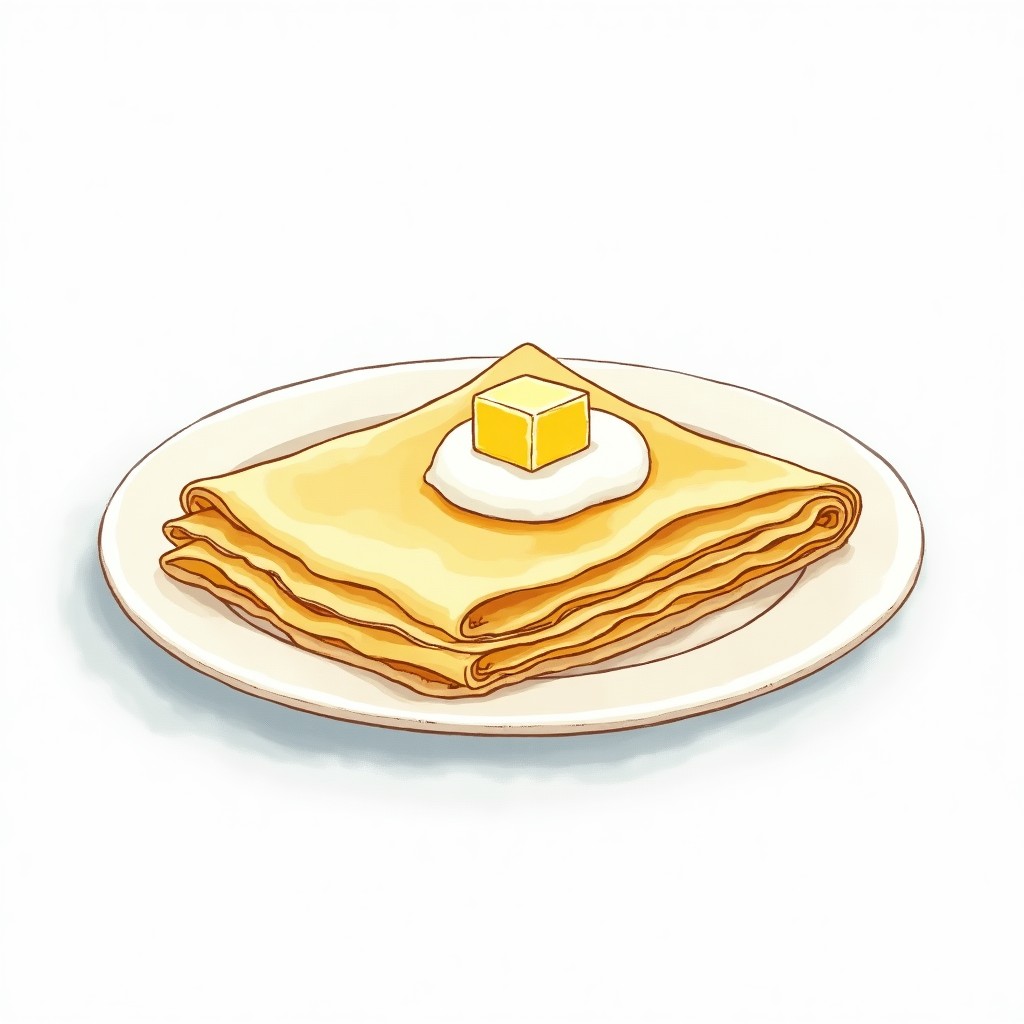
Classic French Crepes
Paper-Thin French Crepes — The Batter That Changes Everything
These aren't your thick, fluffy American pancakes — French crepes are gossamer-thin canvases that showcase technique over bulk. Once you master the swirl-and-pour motion, you'll have an elegant base for anything from jam and butter to savory fillings that make dinner feel special.
French crepes prove that some of the best foods come from the simplest formulas. Just flour, eggs, milk, and a touch of butter create something that transcends its humble ingredients — paper-thin rounds that are somehow both delicate and resilient enough to hold whatever you dream up for them.
The technique matters more than the recipe here. That quick wrist motion that spreads batter across the pan in one fluid swirl separates crepes from thick, cakey pancakes. When done right, you get gossamer sheets with lacy edges that tear if you're not careful but fold beautifully around sweet or savory fillings. The French have been perfecting this dance between batter and pan for centuries, turning street corners into impromptu theaters where crepe makers work their magic.
What makes these crepes special isn't just their thinness — it's their versatility. Spread them with Nutella and fold into quarters for dessert. Fill them with ham and cheese for a quick dinner. Roll them around fresh fruit for brunch. They're blank canvases that adapt to whatever mood strikes you, and once you nail the technique, you'll find yourself making them far more often than you'd expect.
Nutrition
Ingredients
- 1 cupall-purpose flour, sifted if lumpy
- 2 largelarge eggs, room temperature preferred
- 1¼ cupwhole milk, room temperature
- 2 tbspunsalted butter, melted and slightly cooled
- 1 tbspgranulated sugar
- ¼ tspfine salt
- 1 tbspbutter for the pan
Instructions
- Combine flour, sugar, and salt in a large bowl, whisking until evenly distributed. Breaking up any flour clumps now prevents lumps in your finished batter.
- In a separate bowl, beat the eggs and milk together until well combined. Slowly pour this mixture into the flour while whisking constantly — this gradual approach keeps the batter silky smooth instead of lumpy.
- Stream in the melted butter while whisking until completely incorporated. The batter should be thin and pourable, similar to heavy cream consistency.
- Cover the batter and let it rest at room temperature for 30 minutes. This resting time allows the flour to fully hydrate and any small bubbles to settle, giving you smoother crepes.⏱ 30 min
- Warm an 8-inch nonstick skillet over medium heat and lightly brush with butter. The pan is ready when a drop of water sizzles and evaporates quickly.
- Pour ¼ cup of batter into the center of the hot pan, then immediately lift and tilt the pan in a circular motion to spread the batter evenly across the bottom. Work quickly — the batter sets fast.
- Cook until the edges turn golden and start to pull away from the sides, and the center looks set rather than wet. The bottom should be lightly golden when you peek.⏱ 1 min
- Using a thin spatula, carefully flip the crepe and cook the second side just until it develops light golden spots. This side cooks much faster.⏱ 30 sec
- Slide the finished crepe onto a plate and repeat with the remaining batter, brushing the pan with more butter every few crepes to prevent sticking.
Tips & Tricks
- Let the first crepe be your practice round — it almost always tears or cooks unevenly as the pan finds its temperature rhythm.
- If your batter seems too thick after resting, whisk in milk one tablespoon at a time until it pours like heavy cream.
- Stack finished crepes between sheets of parchment paper to prevent sticking, and cover with a clean kitchen towel to keep them warm.
- The pan should be hot enough that the batter sizzles when it hits but not so hot that it sets before you can swirl it around.
- Don't flip too early — wait until the edges are golden and lift easily, or you'll end up with torn, uneven crepes.
Frequently Asked Questions
Can I make the batter ahead of time?
Yes, crepe batter actually improves overnight in the refrigerator. The flour continues to hydrate and any remaining lumps dissolve. Just whisk it smooth before using and thin with a splash of milk if it's too thick.
What if I don't have a nonstick pan?
A well-seasoned cast iron or carbon steel pan works beautifully once it's properly heated. You'll need to butter the pan more frequently, and the first crepe might stick a bit as the pan develops its cooking surface.
Why are my crepes thick instead of thin?
You're likely using too much batter per crepe or not tilting the pan quickly enough after pouring. Use exactly ¼ cup batter and immediately swirl the pan to spread it thin before it sets.
How do I store leftover crepes?
Stack cooled crepes with parchment paper between each one and refrigerate for up to 3 days, or freeze for up to 2 months. Reheat in a dry pan over medium-low heat for 30 seconds per side.