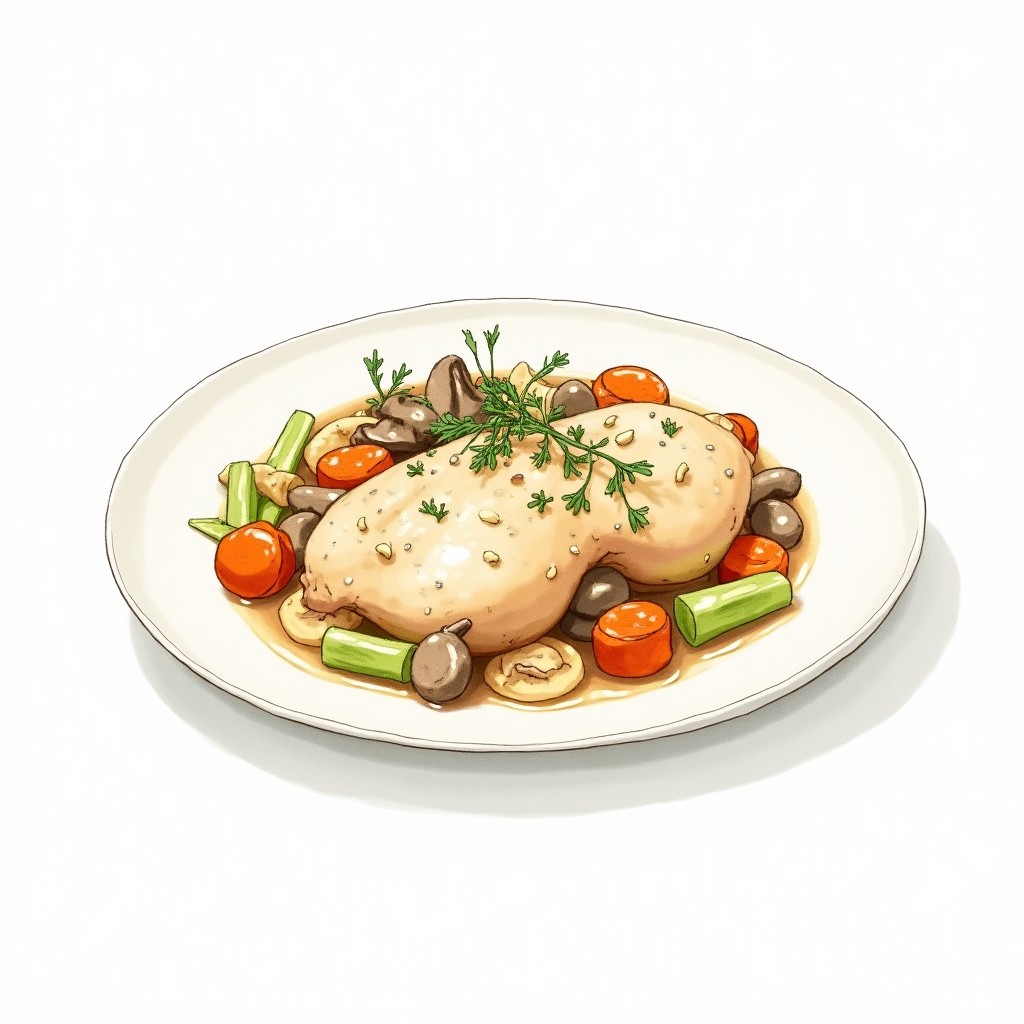
Classic Chicken Fricassee
Rustic Chicken Fricassee — The French Braise That Builds Flavor Layer by Layer
This is old-school French cooking at its most comforting: chicken pieces slowly braised until fork-tender in a velvety cream sauce enriched with aromatic vegetables. It's the kind of dish that fills your kitchen with the most incredible smell and rewards your patience with deep, satisfying flavors that only come from proper braising.
Fricassee bridges the gap between rustic home cooking and classical French technique, creating something that's both approachable and elegant. Unlike a quick sauté or simple roast, this method builds complexity through gentle braising, where each ingredient contributes its own layer to the final dish. The chicken becomes impossibly tender while infusing the cooking liquid with richness, the vegetables break down just enough to thicken the sauce naturally, and that final swirl of cream brings everything together into something cohesive and satisfying.
What makes fricassee special is its forgiving nature — it actually improves with time and gentle heat. The browning step creates depth, but the slow simmer is where the magic happens. The chicken releases its natural gelatin, the vegetables surrender their sugars, and the flour you stirred in earlier works quietly to create a sauce that clings without being heavy. This is peasant cooking elevated by technique, the kind of dish that fed French families for generations because it transforms tough cuts into something magnificent.
The beauty of a good fricassee lies in its timing flexibility. You can hold it at a low simmer for an extra fifteen minutes if dinner gets delayed, or prepare it entirely ahead and reheat gently. It's comfort food that happens to follow classical French principles — building flavor systematically, respecting each ingredient's contribution, and finishing with restraint rather than excess.
Nutrition
Ingredients
- 3 lbwhole chicken, cut into 8 pieces (or use thighs and drumsticks)
- 2 tbspunsalted butter
- 2 tbspall-purpose flour
- 2 cupgood-quality chicken broth
- ½ cupheavy cream
- 1 mediumyellow onion, diced
- 2 mediumcarrots, sliced into rounds
- 2 stalkcelery stalks, chopped
- 8 ozbutton or cremini mushrooms, sliced
- 2 clovegarlic cloves, minced
- 2 tbspfresh flat-leaf parsley, chopped
- 1 tspfresh thyme leaves (or 1/2 tsp dried)
- 1 bay leaf
- kosher salt and freshly ground black pepper
- 2 tbspneutral vegetable oil
Instructions
- Pat the chicken pieces completely dry and season them all over with salt and pepper. Let them sit at room temperature for about 10 minutes — this helps them brown more evenly and cook more consistently.
- Warm the oil in a heavy Dutch oven or wide braising pot over medium-high heat until it shimmers. You want the oil hot enough to sear properly but not smoking.
- Working in batches to avoid crowding, brown the chicken pieces on all sides until they develop a rich golden color. Don't rush this step — good browning creates the flavor foundation for the entire dish. Transfer the browned chicken to a plate.⏱ 8 min
- Lower the heat to medium and add the butter to the same pot. Once it melts and stops foaming, add the onions, carrots, and celery. Cook, stirring occasionally, until the vegetables soften and the onions turn translucent.⏱ 5 min
- Toss in the mushrooms and garlic, stirring them into the other vegetables. Keep cooking until the mushrooms release their liquid and start to caramelize lightly around the edges — they'll smell earthy and rich.⏱ 4 min
- Sprinkle the flour evenly over the vegetables and stir constantly to coat everything. Let the flour cook out for about a minute — this removes the raw flour taste and helps thicken the sauce later.⏱ 1 min
- Pour in the chicken broth gradually while whisking constantly to prevent lumps from forming. Make sure to scrape up all those beautiful browned bits from the bottom of the pot — they're pure flavor gold.
- Nestle the browned chicken pieces back into the pot, along with any accumulated juices. Add the thyme and bay leaf, making sure the herbs are distributed throughout the liquid.
- Bring everything to a gentle boil, then reduce the heat to low, cover the pot, and let it simmer slowly. The chicken should be barely bubbling — vigorous boiling will make it tough. Check occasionally and adjust heat as needed.⏱ 30 min
- Remove the lid and stir in the cream and chopped parsley. Let it simmer uncovered to concentrate the flavors and allow the sauce to thicken slightly. The cream should blend seamlessly into the cooking liquid.⏱ 5 min
- Fish out the bay leaf and discard it. Taste the sauce and adjust the seasoning with salt and pepper as needed. The chicken should be fall-off-the-bone tender and the sauce should coat the back of a spoon lightly.
Tips & Tricks
- Don't skip patting the chicken completely dry before seasoning — wet skin won't brown properly and you'll miss that crucial flavor foundation.
- Keep the simmer gentle once you add the chicken back; aggressive bubbling will make the meat stringy instead of tender.
- The flour needs that full minute to cook out after you add it to the vegetables, otherwise your sauce will taste starchy.
- Add the cream at the very end and don't let it boil hard afterward — high heat can cause it to curdle or separate.
- This reheats beautifully, but add a splash of broth when warming leftovers since the sauce thickens as it cools.
Frequently Asked Questions
Can I use chicken thighs only instead of a whole cut-up chicken?
Absolutely — thighs are actually ideal for braising since they stay more tender than breasts. Use about 2.5 pounds of bone-in thighs and reduce the cooking time by about 10 minutes.
What can I substitute for heavy cream?
Half-and-half works but the sauce will be thinner. For dairy-free, use full-fat coconut milk, but add it gradually and taste as you go since it has a different flavor profile.
Can I make this ahead and reheat it?
Yes, it actually improves overnight in the refrigerator. Reheat gently over low heat, stirring in a little extra broth if the sauce has thickened too much.
Why is my sauce not thickening properly?
Make sure you cooked the flour long enough with the vegetables, and that your simmer is gentle but consistent. If it's still thin, mix 1 tablespoon flour with 2 tablespoons cold broth and whisk it in during the last few minutes.
What vegetables can I substitute or add?
Pearl onions, parsnips, or baby potatoes work well. Add root vegetables with the carrots, and delicate ones like peas or green beans in the last 10 minutes of cooking.