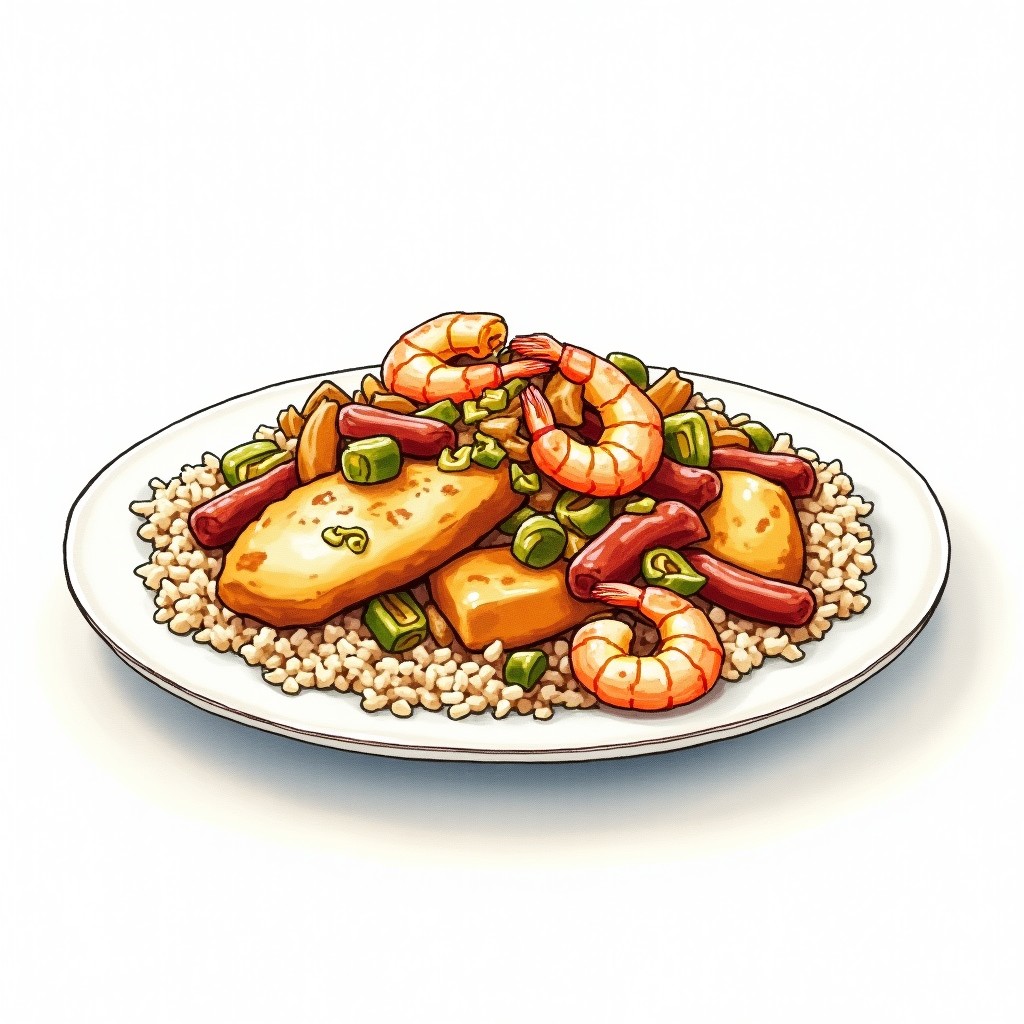
Classic Chicken and Shrimp Jambalaya
Louisiana Chicken and Shrimp Jambalaya
This is jambalaya done right — everything cooks in one pot, the rice absorbs all those rich flavors from the browned meats and aromatic vegetables, and you get that perfect balance of chicken, shrimp, and smoky andouille in every spoonful. The trick is layering flavors as you go and letting the rice steam undisturbed so it comes out fluffy, not mushy.
The first time you taste properly made jambalaya, you understand why Louisiana cooks guard their techniques so fiercely. This isn't just rice with stuff thrown on top — it's a carefully orchestrated dance where every ingredient builds on the last, creating layers of flavor that somehow taste both complex and completely harmonious.
True jambalaya comes from the Creole and Cajun kitchens of Louisiana, where cooks learned to stretch expensive proteins like shrimp with affordable rice, andouille, and whatever vegetables were on hand. The genius lies in the method: browning the meats first creates a flavorful foundation, the holy trinity of vegetables (onion, bell pepper, celery) adds aromatics, and the rice cooks directly in all those concentrated flavors rather than separately.
What sets this version apart is the timing. The chicken and sausage get their moment to develop a proper crust, the rice toasts just enough to hold its texture during the long simmer, and the shrimp go in at the very end so they stay tender. It's the kind of one-pot meal that feeds a crowd without breaking the bank, and somehow tastes even better the next day.
Nutrition
Ingredients
- 1 lbboneless chicken thighs, cut into 1-inch pieces
- 8 ozandouille sausage, sliced into rounds
- 1 lblarge shrimp, peeled and deveined
- 2 tbspvegetable oil
- 1 largelarge yellow onion, diced
- 1 largelarge bell pepper, diced
- 2 stalkcelery stalks, diced
- 3 clovegarlic cloves, minced
- 1½ cuplong-grain white rice
- 3 cupchicken stock
- 1 candiced tomatoes
- 2 tspCreole seasoning
- 1 tsppaprika
- ½ tspcayenne pepper
- 2 bay leaves
- salt and black pepper to taste
Garnish
- 3 green onions, sliced
- ¼ cupfresh parsley, chopped
Instructions
- Warm the oil in a large heavy-bottomed pot over medium-high heat until it shimmers. You need a pot with good heat distribution for this dish — cast iron or enameled Dutch oven works perfectly.
- Season the chicken pieces with salt, pepper, and 1 teaspoon of Creole seasoning, then add to the hot oil. Brown them on all sides until you get a nice golden crust — this takes 6-8 minutes total. Don't crowd the pan or they'll steam instead of brown.⏱ 8 min
- Toss in the andouille slices and let them brown alongside the chicken for 3-4 minutes. The sausage fat will start rendering and add another layer of flavor to your base.⏱ 4 min
- Drop in the onion, bell pepper, and celery — Louisiana's holy trinity of vegetables. Cook until they've softened and the onions look translucent, about 5-6 minutes. Stir occasionally to prevent sticking.⏱ 6 min
- Stir in the garlic along with the remaining Creole seasoning, paprika, and cayenne. Cook just until you can smell that garlic getting fragrant — about 1 minute is all you need here.⏱ 1 min
- Add the rice and stir everything together, coating each grain with the flavorful oil and spices. Let it toast for 2 minutes — this helps the rice hold its shape during the long simmer ahead.⏱ 2 min
- Pour in the chicken stock, diced tomatoes with their juice, and add the bay leaves. Bring everything to a rolling boil, stirring once to make sure nothing's stuck to the bottom.
- Drop the heat to low, cover tightly, and let it simmer undisturbed for 18-20 minutes until the rice is tender and has absorbed most of the liquid. Resist the urge to peek — lifting the lid releases steam and can make the rice gummy.⏱ 20 min
- Nestle the shrimp into the rice mixture, pushing them down slightly so they're mostly covered. Cover again and cook until the shrimp turn pink and opaque, 5-6 minutes. They'll finish cooking perfectly in that steamy heat.⏱ 6 min
- Pull the pot off the heat and let it rest, still covered, for 5 minutes. This lets the rice finish absorbing any remaining liquid and settle. Fish out the bay leaves before serving.⏱ 5 min
- Fluff gently with a fork and top with the sliced green onions and chopped parsley. Taste and adjust seasoning with salt and pepper as needed before bringing it to the table.
Tips & Tricks
- Use chicken thighs instead of breasts — the extra fat keeps them from drying out during the long cooking time and adds more flavor to the rice.
- Don't skip toasting the rice in the flavored oil before adding liquid; this step helps prevent mushy, overcooked grains.
- If your jambalaya looks dry near the end of cooking, add hot stock or water 2 tablespoons at a time rather than cold liquid, which can shock the rice.
- Let the finished jambalaya rest off the heat for 5 minutes before serving — this allows any remaining liquid to absorb completely.
- Save time by using pre-cooked andouille, but brown it anyway to render the fat and develop deeper flavor.
Frequently Asked Questions
Can I substitute the andouille sausage?
Kielbasa or any smoky sausage works well, though you'll lose some of that signature Creole flavor. In a pinch, chorizo adds nice spice, but use it sparingly since it's saltier than andouille.
What if I don't have Creole seasoning?
Make your own by mixing 1 teaspoon each of paprika, garlic powder, and onion powder with 1/2 teaspoon each of oregano, thyme, and black pepper, plus 1/4 teaspoon cayenne.
Can this be made ahead?
Jambalaya actually improves overnight as the flavors meld. Reheat gently with a splash of stock if it seems dry, and add the fresh herb garnish just before serving.
My rice turned out mushy — what went wrong?
This usually happens from stirring too much during cooking or using too much liquid. Once you add the stock, stir once and then leave it alone until it's time to add the shrimp.