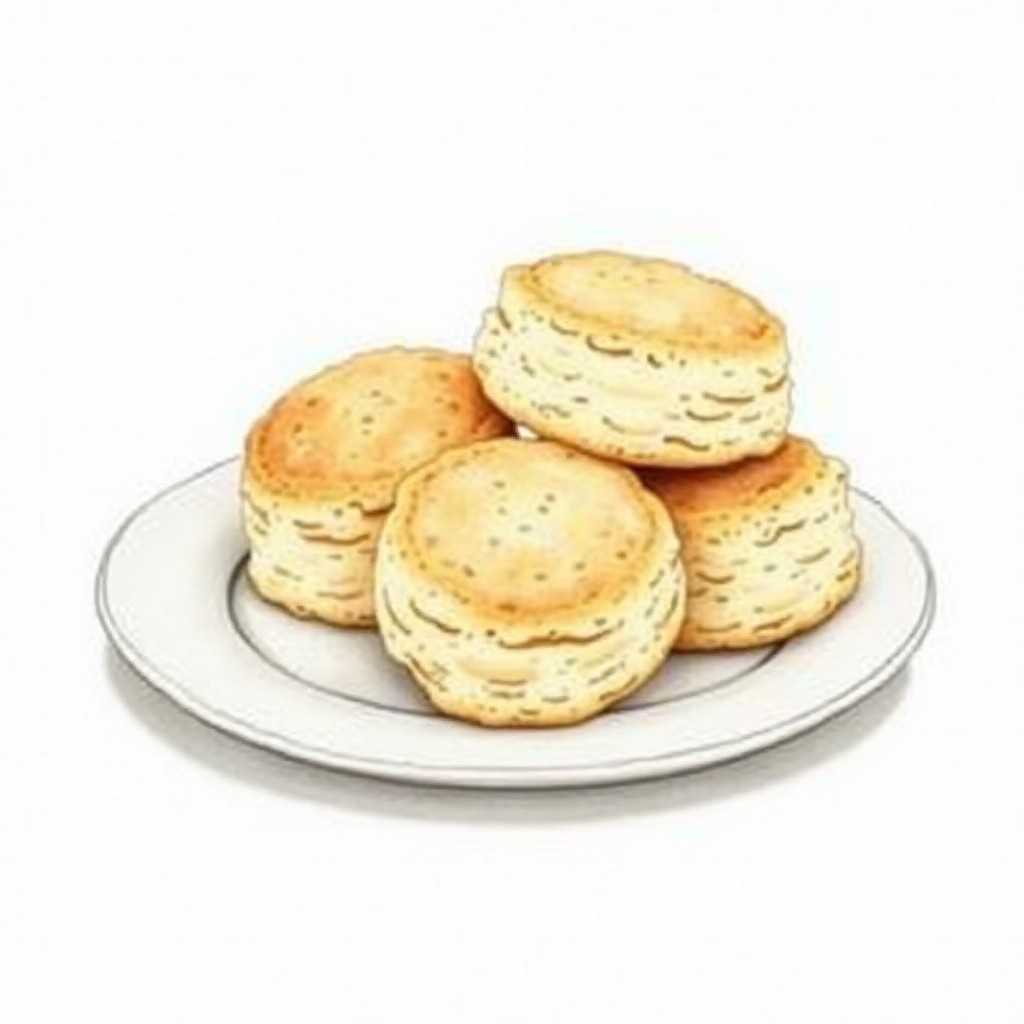
Classic Buttermilk Scones
Essential Buttermilk Scones — Crisp-Edged Wedges with Layers That Actually Flake
Cold butter creates pockets of steam that lift these scones into proper flaky territory, while tangy buttermilk keeps the crumb tender without making it heavy. They bake up with golden tops and sides that give way to a soft, barely sweet interior that's ready for jam or honey.
EnglishBreakfastBrunchVegetarianComfort FoodBaking
Nutrition
Ingredients
- 2 cupall-purpose flour
- 1 tbspgranulated sugar
- 1 tbspbaking powder, fresh for best lift
- 1 tspsalt
- 6 tbspcold unsalted butter, cubed
- ¾ cupcold buttermilk
Egg wash
- 1 largelarge egg, beaten(optional)
Instructions
- Set your oven to 425°F and lay parchment paper across a large baking sheet. The high heat creates the steam you need for good rise, so don't be tempted to go lower.
- Combine the flour, sugar, baking powder, and salt in a large bowl, whisking them together until no streaks remain. Getting these dry ingredients evenly mixed now prevents uneven rising later.
- Add the cold butter cubes to the flour mixture and work them in with a pastry cutter or your fingertips until you have a mix of coarse crumbs and pea-sized butter pieces. Those butter chunks are what create the flaky layers, so don't overwork it into a uniform powder.
- Make a well in the center and pour in the cold buttermilk. Using a fork, gently stir from the outside in just until the dough starts to hold together — it should look shaggy and slightly rough. Overmixing leads to tough scones.
- Dump the shaggy dough onto a lightly floured counter and gently pat it into an 8-inch circle about 3/4 inch thick. Work quickly and don't knead — just press it together with your palms until it forms a cohesive round.
- Use a sharp knife or bench scraper to cut straight down through the dough, dividing it into 8 equal wedges. Clean cuts help the scones rise evenly, so don't drag the blade through.
- Transfer the wedges to your prepared baking sheet, leaving about 2 inches between each piece. They'll spread slightly as they bake, and the space helps them brown evenly on all sides.
- Brush the tops with beaten egg if you want that bakery-style golden sheen. It's not essential for taste, but it does give a beautiful finish and helps any toppings stick.
- Slide into the oven and bake until the tops and bottoms are golden brown, about 16-18 minutes. They should feel set when you gently press the sides and sound hollow when tapped on the bottom.⏱ 18 min
- Let them rest on the baking sheet for 5 minutes to firm up slightly before transferring. They're at their absolute best while still warm, when the outside stays crisp and the inside is at peak tenderness.⏱ 5 min