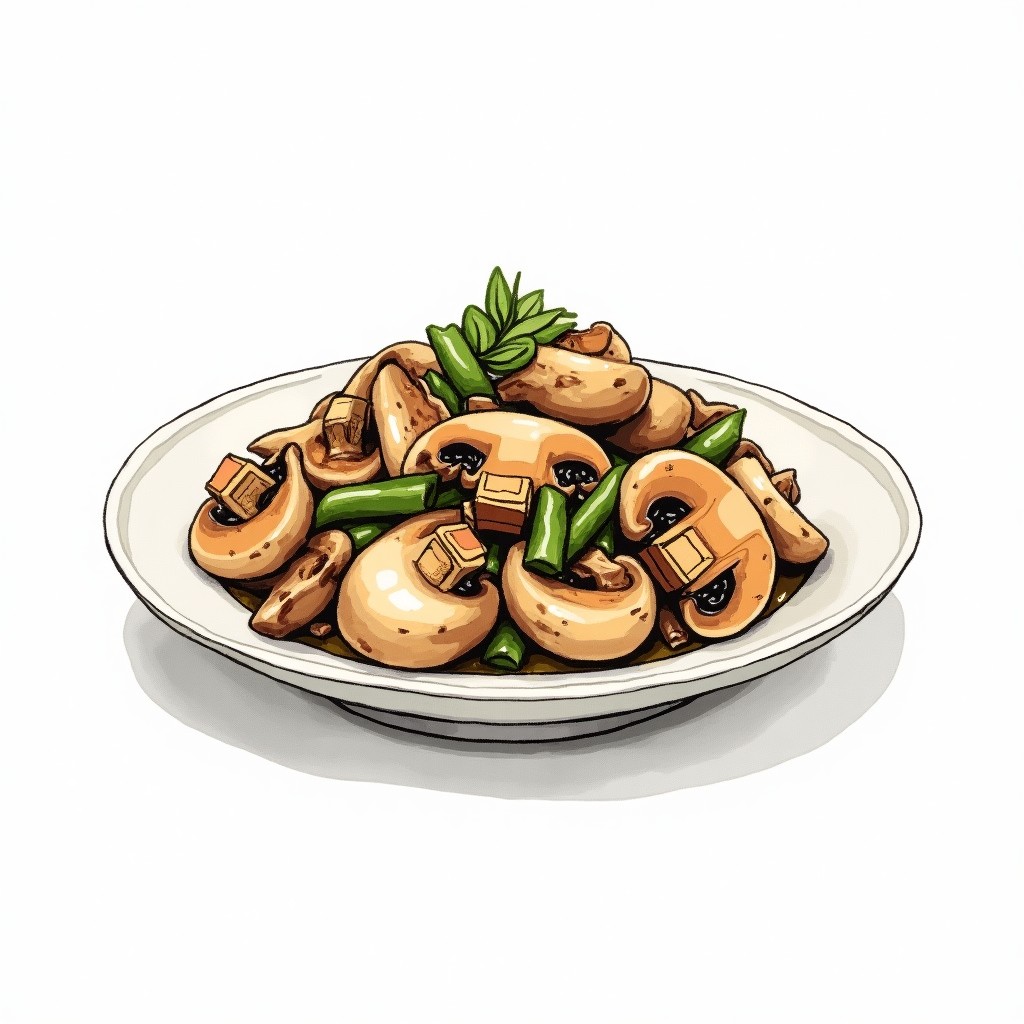
Chinese Style Mushrooms
Restaurant-Style Chinese Braised Mushrooms
Master this classic technique that transforms humble mushrooms into an umami-rich delicacy. The secret lies in building layers of flavor with aromatics and allowing the sauce to slowly concentrate into a glossy, savory coating that rivals your favorite Chinese restaurant.
Chinese restaurants have mastered the art of making vegetables taste indulgent, and their braised mushrooms are a perfect example. What looks like a simple side dish is actually a study in layering flavors — aromatics bloom in hot oil, wine deglazes and perfumes, then everything slowly concentrates into a glossy sauce that makes each mushroom taste twice as rich as it actually is.
The technique comes from traditional Chinese home cooking, where braising transforms humble ingredients into something special. Unlike Western mushroom preparations that often rely on cream or cheese for richness, this method builds umami through soy sauces, vegetarian oyster sauce, and the slow reduction of aromatic stock. The mushrooms release their own moisture, which mingles with the braising liquid to create a sauce that's both light and intensely flavorful.
What makes this version restaurant-quality is the attention to texture and timing. The mushrooms need enough time to absorb the braising liquid without becoming soggy, while the sauce reduces to just the right consistency — glossy enough to coat each piece but not so thick it becomes gluey. It's the kind of dish that makes you realize why Chinese cooks are so respected for their vegetable cookery.
Ingredients
- 2 tbspneutral oil (vegetable or peanut oil work beautifully)
- ½ tspfresh ginger, minced to release maximum flavor
- 1½ tspgarlic cloves, chopped (about 2 medium cloves)
- 2 tbspshallots, finely chopped for sweetness
- 20 ozwhite button or cremini mushrooms, cut in half or quarters for even cooking
- 1½ tbspShaoxing wine (dry sherry as substitute)
- 1¼ cuplow sodium vegetable stock, preferably homemade
- 1 tbspvegetarian oyster sauce for deep umami
- 2 tsplight soy sauce for salinity
- ½ tspdark soy sauce for rich color
- 1 tsptoasted sesame oil for aromatic finish
- 1 pinchsugar to balance the savory elements
- ⅛ tspground white pepper for subtle heat
- 1 tspcornstarch for silky sauce texture
- 2 tspwater for cornstarch slurry
- 1 scallion, finely chopped for fresh contrast
Instructions
- Heat your wok or large skillet over medium heat until it shimmers slightly. Add the oil and swirl to coat the entire surface. The oil should move freely and look glossy. Add the minced ginger first—it should sizzle gently and release its fragrant oils. After 30 seconds, add the garlic and shallots, listening for that satisfying sizzle that tells you the heat is just right.⏱ 30 sec
- Stir the garlic and shallots constantly until they become fragrant and begin to soften—about 30 seconds. You'll smell the aromatics blooming beautifully. Now add all the mushrooms at once and toss them vigorously to coat with the aromatic oil. Pour in the Shaoxing wine, which will create a wonderful steam and deglaze any caramelized bits. Continue cooking for 2-3 minutes, stirring occasionally, until the mushrooms begin to develop golden-brown edges and release their moisture.⏱ 3 min
- Pour in the vegetable stock along with the oyster sauce, both soy sauces, sesame oil, sugar, and white pepper. The liquid should come about halfway up the mushrooms. Bring the mixture to a gentle simmer—you'll see small bubbles breaking the surface. Cover and let the mushrooms braise for 5 minutes to absorb the flavors. Remove the lid and continue cooking for 10 minutes more, stirring occasionally, until the sauce reduces to a glossy coating that clings to the mushrooms beautifully.⏱ 15 min
- In a small bowl, whisk the cornstarch with 2 teaspoons of water until completely smooth—no lumps should remain. Pour this slurry into the mushrooms while stirring gently. The sauce will thicken almost immediately into a lustrous, restaurant-quality glaze. If there's still excess liquid pooling in the pan, increase the heat briefly to reduce it. Taste and adjust seasoning if needed, then transfer to your serving dish and garnish with the fresh scallions for a pop of color and crisp texture.
Tips & Tricks
- Don't overcrowd the pan when adding mushrooms — they'll steam instead of developing those golden edges that add depth to the final dish.
- The sauce should coat the mushrooms like a glaze but not pool in the bottom of the pan; if it's too thin after adding the cornstarch slurry, turn up the heat for 30 seconds to reduce it further.
- Save time by prepping all your aromatics before you start cooking — once the oil hits the pan, everything moves quickly until the braising stage.
- Taste the sauce before thickening and adjust with a splash more soy sauce if it needs depth, or a pinch of sugar if it tastes too salty.
- These keep well in the fridge for up to 3 days and actually improve in flavor as they sit, making them perfect for meal prep.
Frequently Asked Questions
Can I use different types of mushrooms for this?
Absolutely — shiitake, king oyster, or baby bella mushrooms all work beautifully. Shiitake will give you the most authentic flavor, while king oyster mushrooms hold their shape particularly well during braising.
What can I substitute for Shaoxing wine?
Dry sherry is the closest substitute, or you can use Japanese sake. In a pinch, use dry white wine, though the flavor won't be quite as authentic.
Can I make this ahead of time?
Yes, these mushrooms are excellent made ahead and reheated gently. The flavors actually deepen overnight, and they'll keep in the refrigerator for up to 3 days.
Why did my sauce turn out watery instead of glossy?
This usually happens when the cornstarch slurry wasn't mixed smoothly or the mushrooms released more liquid than expected. Increase the heat and cook uncovered for another minute or two to reduce the excess liquid.