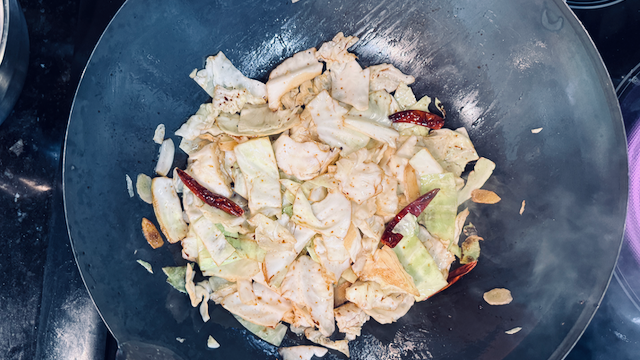
Chinese Hand Torn Cabbage
Hand-Torn Sichuan Cabbage with Fragrant Peppercorns
This classic Sichuan technique transforms humble cabbage into something extraordinary. The hand-tearing creates irregular edges that catch the aromatic oil, while those signature peppercorns deliver their distinctive numbing heat. It's the kind of dish that teaches you why wok hei matters.
There's something deeply satisfying about tearing cabbage by hand instead of reaching for a knife. Your fingers naturally follow the vegetable's grain, creating jagged surfaces that grab onto sauce in ways no uniform slice ever could. This particular marriage of technique and ingredient speaks to the heart of Sichuan cooking—transforming the ordinary through understanding rather than complexity.
The real magic happens in those first thirty seconds when Sichuan peppercorns meet hot oil. Unlike regular black pepper's straightforward heat, these little pods release something altogether different: a floral numbness that spreads across your tongue, followed by a tingling that somehow makes every other flavor more vivid. It's this málà sensation—literally "numb-spicy"—that defines an entire regional cuisine.
What makes this dish particularly brilliant is how it demonstrates wok hei without requiring years of practice. The high heat, the quick movements, the way aromatics bloom and fade in seconds—it's all here, distilled into five minutes of focused cooking. The cabbage emerges glossy and bright, each torn piece carrying its load of fragrant oil and that unmistakable Sichuan perfume that lingers long after the last bite.
Ingredients
- 1 tbspneutral cooking oil (peanut or vegetable work beautifully)
- 1 tspSichuan peppercorns, whole
- 3 clovegarlic cloves, sliced thin
- 3 slicefresh ginger, sliced into coins
- 6 dried red chillies, whole
- 250 gnapa or green cabbage, hand-torn into bite-sized pieces
- ½ tspdark soy sauce (for color and depth)
- ½ tsplight soy sauce (for saltiness)
- ¼ tspblack rice vinegar (Chinkiang preferred)
- 1 pinchsalt, fine sea salt
- 1 pinchsugar, just a touch to balance
Instructions
- Start with a cold wok—this is key for extracting maximum flavor from your Sichuan peppercorns. Add the oil and peppercorns together, then heat on high flame. You'll know they're ready when the kitchen fills with that distinctive, almost floral aroma and the peppercorns start to sizzle gently. Fish out the peppercorns with a slotted spoon, leaving behind their perfumed oil.
- Working quickly now, toss the ginger slices, garlic, and dried chillies into that fragrant oil. They should sizzle immediately—if not, your wok isn't hot enough. Stir-fry just until the garlic turns golden and the chillies darken, about 30 seconds. Now add your hand-torn cabbage all at once and give everything a vigorous stir to coat each piece in that aromatic oil.
- Watch as the cabbage begins to wilt and turn bright green—this is when it's ready for seasoning. Drizzle in both soy sauces (the dark for color, the light for flavor), followed by that splash of black vinegar which adds a subtle tang. Finish with pinches of salt and sugar to balance the flavors perfectly.
- Give everything one final, vigorous stir-fry to marry all the flavors together. The cabbage should be tender-crisp, glossy with sauce, and intensely aromatic. Taste quickly and adjust seasoning if needed, then serve immediately while the wok hei is still singing.⏱ 20 sec
Tips & Tricks
- Remove the Sichuan peppercorns before adding the cabbage—they've done their job infusing the oil and can turn bitter if left to cook much longer.
- Tear the cabbage into palm-sized pieces with your hands, following the natural breaks in the leaves rather than fighting against the grain.
- Have all your sauces measured and ready before you start cooking—once that wok gets hot, everything moves fast.
- If your Sichuan peppercorns have been sitting in the pantry for months, toast them in a dry pan first to wake up their oils.
- The cabbage should still have some bite when finished—overcooking turns this crisp, aromatic dish into something soggy and dull.
Frequently Asked Questions
Can I use regular peppercorns if I can't find Sichuan ones?
Regular black peppercorns won't give you that signature numbing sensation, but they'll still create a fragrant oil. You could also try pink peppercorns for a different but interesting flavor profile.
What's the best type of cabbage for this dish?
Napa cabbage works perfectly with its tender leaves and crisp stems. Regular green cabbage is fine too, though it will need an extra minute of cooking to become properly tender.
Can I make this dish ahead of time?
This really shines when served immediately while the wok hei is still present. Reheated, it loses that fresh crispness and aromatic punch that makes the dish special.
My dried chillies burned before the garlic was ready. What went wrong?
Your oil was too hot when you added the aromatics. Next time, let the oil cool for 10-15 seconds after removing the peppercorns, then add the ginger first, followed by garlic, then chillies.