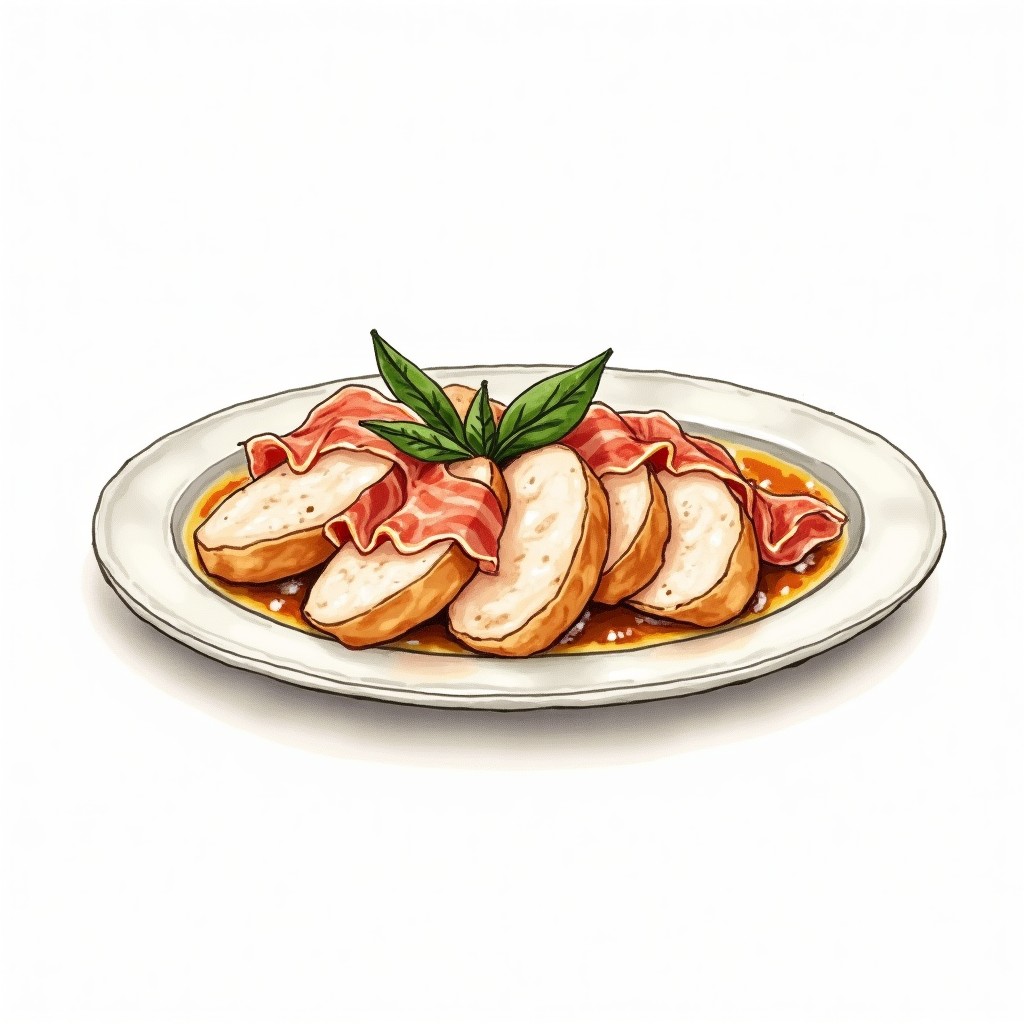
Chicken Saltimbocca
Chicken Saltimbocca — Prosciutto-Wrapped Elegance with White Wine Pan Sauce
This Roman classic transforms simple chicken breasts into something special through the magic of good ingredients working together. The prosciutto crisps beautifully while keeping the chicken moist, and fresh sage adds an earthy note that pairs perfectly with the bright wine sauce.
The genius of saltimbocca lies in its restraint — just four main ingredients that know exactly how to work together. This isn't fusion cooking or innovation for its own sake; it's Roman tradition at its most elegant, where prosciutto becomes both seasoning and wrapper, sage provides just enough herbal brightness, and white wine transforms the pan drippings into liquid gold.
What makes this dish so compelling is the way each element enhances the others without competition. The prosciutto protects the chicken from drying out while crisping into something almost bacon-like. The sage leaves, pressed between meat and ham, release their oils slowly as everything cooks. Even the name tells the story — "saltimbocca" literally means "jumps in the mouth," which captures both the dish's liveliness and the Roman love for food that makes you pay attention.
This version stays true to the original while acknowledging that most of us don't have access to paper-thin veal cutlets. Chicken breast, properly pounded and handled with care, gives you the same tender result with ingredients you can find anywhere. The key is understanding that this isn't about complicated technique — it's about respecting good ingredients and not getting in their way.
Nutrition
Ingredients
- 4 boneless skinless chicken breasts, pounded to 1/2 inch thick
- 8 sliceslices prosciutto
- 16 leavesleaves fresh sage
- 2 tbspolive oil
- salt and black pepper
- toothpicks
sauce
- ½ cupdry white wine
- 3 tbspbutter
- 1 tbsplemon juice
Instructions
- Pat the chicken dry and season both sides with salt and pepper. Lay 2 sage leaves on each breast, then wrap each one with 2 slices of prosciutto, securing everything in place with toothpicks. The prosciutto should overlap slightly to stay put during cooking.
- Warm the olive oil in a large skillet over medium-high heat until it shimmers but doesn't smoke. The pan needs to be hot enough to sear the prosciutto properly.⏱ 2 min
- Lay the chicken prosciutto-side down in the hot oil and cook without moving until the prosciutto is golden and crispy, 4-5 minutes. Flip and continue cooking until the internal temperature hits 165°F, another 4-5 minutes.⏱ 9 min
- Transfer the chicken to a warm plate and cover loosely with foil to rest while you make the sauce.
- Pour the wine into the same skillet, using a wooden spoon to scrape up all those flavorful browned bits from the bottom. Let it bubble and reduce by half, 2-3 minutes.⏱ 3 min
- Pull the skillet off the heat and whisk in the cold butter until it creates a glossy sauce, then stir in the lemon juice. Taste and adjust seasoning with salt and pepper.
- Carefully remove the toothpicks from each chicken breast, spoon the warm sauce over the top, and serve right away while everything is still hot.
Tips & Tricks
- Pound the chicken to an even 1/2-inch thickness using gentle, overlapping strokes — uneven pieces cook unevenly and the prosciutto won't adhere properly.
- Don't skip the resting step after cooking; it lets the juices redistribute and makes removing the toothpicks much easier without tearing the prosciutto.
- Use a wooden spoon to scrape up the fond when making the sauce — those browned bits are where most of your flavor lives.
- Cold butter whisked into the hot reduced wine creates an emulsion that coats the chicken beautifully; room temperature butter can break the sauce.
- If your sage leaves are large, tear them in half before layering — you want coverage without overwhelming the delicate balance of flavors.
Frequently Asked Questions
Can I use turkey or pork instead of chicken?
Turkey cutlets work perfectly and cook in about the same time. Pork tenderloin, sliced into medallions and pounded thin, is actually closer to the traditional veal and gives excellent results.
What if I can't find fresh sage?
Dried sage won't give you the same bright, herbal notes, but use about 1 teaspoon sprinkled over the chicken before wrapping. Fresh thyme or rosemary make better substitutes if you have them.
Can I make this without wine?
Replace the wine with chicken broth mixed with a tablespoon of white wine vinegar. You'll lose some complexity, but the sauce will still have brightness and help deglaze the pan properly.
Why did my prosciutto turn out chewy instead of crispy?
The pan probably wasn't hot enough, or you moved the chicken too soon. Let that first side get properly golden before flipping — it takes patience but the texture difference is worth it.
How do I know when the chicken is done without a thermometer?
Press the thickest part gently with your finger — it should feel firm and spring back slightly. Any juices that run out should be clear, not pink.