Chicken Congee
Silky Chinese Chicken Congee
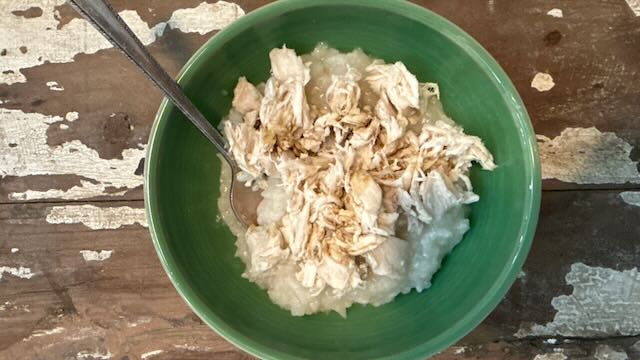
Rice transforms into pure velvet here, breaking down completely as it absorbs rich chicken broth over a long, gentle simmer. The chicken thighs melt apart into tender shreds, creating the kind of soul-warming bowl that feels like medicine for whatever ails you.
There's something ancient and essential about congee — this pudding-soft rice porridge that appears across Asia in countless forms, each culture claiming it as their own comfort cure-all. The Chinese version stands apart for its complete surrender to time and patience, transforming simple grains into something that barely resembles rice at all.
What sets genuine chicken congee apart from rushed versions is that slow breakdown of each grain. Over an hour and a half of gentle bubbling, the rice kernels literally dissolve into the liquid, creating a texture that's more silk than soup. The chicken thighs melt right alongside, their fat enriching every spoonful until you can't tell where the meat ends and the porridge begins.
This isn't just breakfast food, despite what many Western cookbooks suggest. In China, congee appears at every meal — a blank canvas that accepts whatever garnishes or mix-ins suit the moment. Some days it's medicinal simplicity with just ginger and salt. Other times it becomes a feast with preserved eggs, pickles, and crispy additions that wake up every corner of your mouth.
Nutrition
Ingredients
- 1 cupjasmine rice, rinsed until clear
- 8 cupgood-quality chicken broth
- 1 lbboneless chicken thighs, cut into 1-inch pieces
- 2 inchesfresh ginger, peeled and sliced into coins
- 2 tspkosher salt
- 1 tspwhite pepper, finely ground
garnish
- 3 green onions, sliced thin on the bias
- 2 tsptoasted sesame oil
- crispy fried onions(optional)
Instructions
- Rinse the jasmine rice in a fine-mesh strainer under cold running water, swishing it around with your fingers until the water runs completely clear — this removes excess starch that could make your congee gluey rather than silky.
- Add the drained rice, chicken broth, chicken pieces, ginger slices, and salt to your largest heavy-bottomed pot. Everything should fit comfortably with room to bubble without overflowing.
- Crank the heat to high and bring everything to a vigorous boil — you'll see steady bubbles breaking the surface. Once boiling, immediately drop the heat to low and adjust to maintain the gentlest possible simmer.⏱ 5 min
- Cover the pot partially, leaving about an inch gap for steam to escape, and let it simmer for 75 minutes. Stir every 15 minutes, scraping the bottom with a wooden spoon to prevent any rice from sticking. The rice will gradually break down and the mixture will become creamy.⏱ 1 hr 15 min
- Fish out and discard the ginger pieces — they've done their aromatic work. Using two forks, shred the chicken directly in the pot until it falls apart into tender strands that disappear into the porridge.
- Stir in the white pepper and taste for salt — the congee should be well-seasoned but not overpowering. Add more salt if needed, keeping in mind that the garnishes will add their own flavor.
- Ladle the hot congee into bowls and top each serving with a generous sprinkle of green onions, a drizzle of sesame oil, and crispy onions if you're using them. The contrast of textures and that final hit of sesame makes all the difference.
Tips & Tricks
- Rinse your rice until the water runs completely clear — cloudy rinse water means excess starch that will make your congee gloppy instead of smooth.
- Don't skip the partial lid coverage during simmering; you need some evaporation to concentrate flavors but full coverage traps too much steam and dilutes the congee.
- If your congee gets too thick as it cools, thin it with hot chicken broth rather than water to maintain that rich flavor.
- Save time by making congee in a slow cooker — use the same ratios but cook on low for 6-8 hours, stirring occasionally.
- Leftover congee thickens dramatically in the fridge; reheat gently with additional broth, stirring constantly to prevent scorching.
Frequently Asked Questions
Can I use chicken breast instead of thighs?
You can, but thighs give much better flavor and texture since their fat keeps the meat moist during the long simmer. If using breast meat, add it during the last 30 minutes to prevent overcooking.
What if I don't have jasmine rice?
Any short or medium-grain rice works well — arborio, sushi rice, or even regular white rice. Avoid long-grain varieties like basmati, which don't break down as completely.
How do I know when the congee is properly cooked?
The rice grains should be completely broken down and barely visible, creating a creamy porridge consistency. It should coat a spoon but still flow easily when ladled.
Can I freeze leftover congee?
Yes, it freezes well for up to 3 months. Thaw overnight in the fridge, then reheat gently with extra broth since it will have thickened considerably.
What other garnishes work besides the ones listed?
Try julienned fresh ginger, soy sauce, chili oil, chopped cilantro, or traditional additions like thousand-year-old eggs or pickled vegetables.