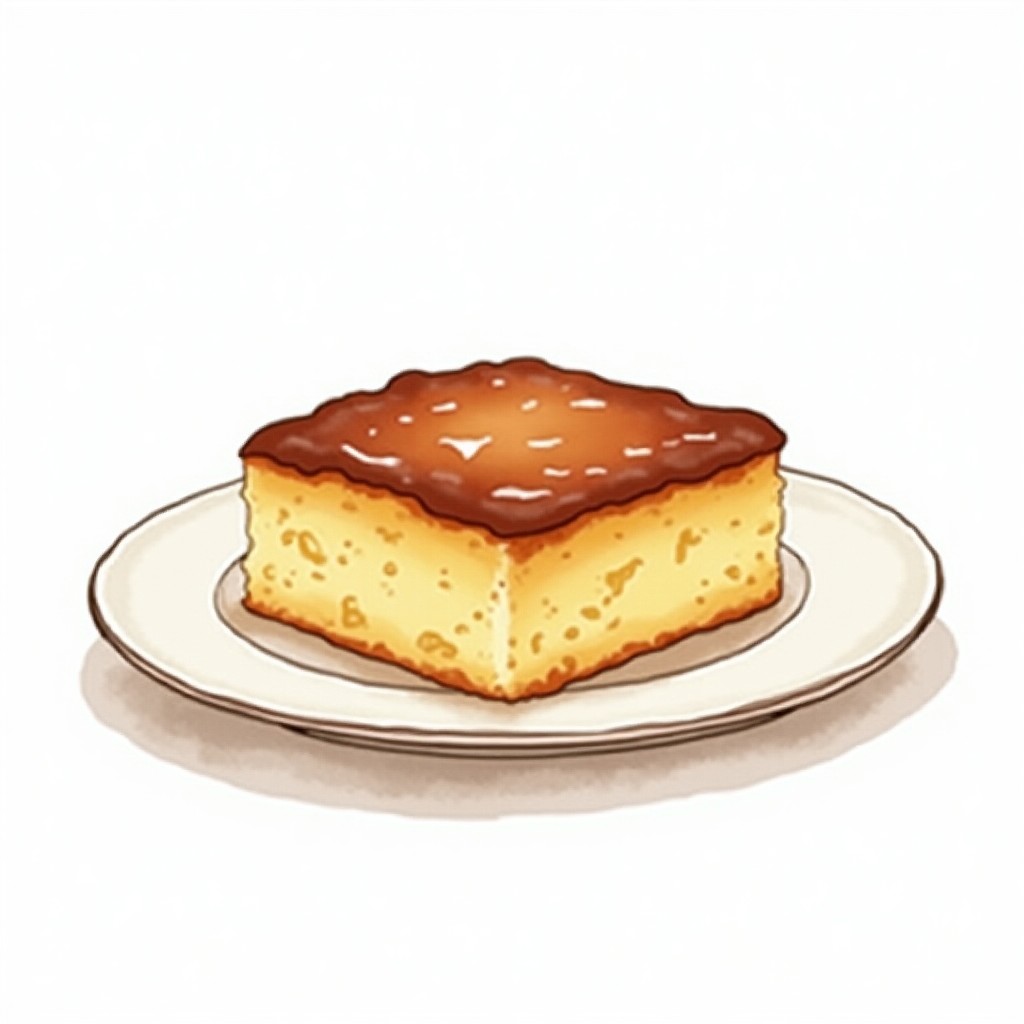
Butter Top Coffee Cake
Classic Butter-Topped Coffee Cake
This yeasted coffee cake delivers a tender, slightly sweet base crowned with a rich custard-like topping that bakes to golden perfection. The overnight rise develops complex flavors, while the butter topping creates an irresistible contrast between creamy richness and delicate cake. It's worth the patience this recipe requires.
Yeasted coffee cake requires patience, but the payoff is unlike any quick-bread version you've tried. The overnight rise transforms simple ingredients into something with real depth — the kind of complexity that only comes from giving dough time to develop its character. Most modern coffee cakes skip this step entirely, relying on baking powder for lift and missing out on the subtle tang and tender crumb that only yeast can provide.
The butter topping here isn't just a sweet crown — it's essentially a custard that bakes directly on the dough, creating layers of texture that range from creamy to lightly set. This technique has German roots, brought to American kitchens by immigrants who understood that good baking is as much about time as it is about ingredients. The custard-like layer stays slightly soft even when fully baked, which might surprise first-time makers but is exactly what makes this cake special.
What you're making is really two recipes in one: a tender yeasted base and a rich, egg-heavy topping that transforms in the oven. The contrast between the pillowy cake and the dense, sweet layer above creates something that's equally at home on a breakfast table or dessert plate. This isn't a quick project, but it's not difficult either — just plan ahead and let the yeast do its work.
Ingredients
Cake
- 1 packageactive dry yeast (1 standard packet)
- 1¼ cupwarm water (110°F, like a comfortable bath)
- 1 cupwhole milk
- ¼ cupvegetable shortening or unsalted butter
- 2 large eggs, room temperature
- 1 tspkosher salt
- ½ cupgranulated sugar
- 4 cupall-purpose flour, plus extra for kneading
Topping
- ¾ cupunsalted butter, softened to room temperature
- 1½ cupgranulated sugar
- ¼ cuppowdered milk (adds richness and structure)
- 4 large eggs, room temperature
- 4 tbspall-purpose flour
- 2 tsppure vanilla extract
Instructions
- Sprinkle the yeast over the warm water in a small bowl and let it sit for 5 minutes until it foams. If it doesn't foam, your yeast is dead — start over with fresh yeast.
- Pour the milk into a small saucepan and heat just until bubbles form around the edges — don't let it boil. Remove from heat, add the shortening, and stir until melted. Let this mixture cool to lukewarm before proceeding.
- Whisk the eggs in a large mixing bowl until smooth. Add the salt, sugar, cooled milk mixture, and activated yeast. Stir everything together until well combined — the mixture should be uniform with no streaks.
- Add the flour one cup at a time, mixing with an electric mixer on low speed after each addition. The dough will be quite soft and slightly sticky — this is exactly what you want for tender coffee cake.
- Scrape down the sides of the bowl thoroughly, cover with a damp kitchen towel, and place in a warm spot to rise for 2 hours or overnight until doubled in size. The long rise develops the flavor beautifully.⏱ 2 hrs
- Turn the risen dough onto a well-floured surface and knead it exactly 200 times — count them out. This develops the gluten structure and makes the dough easier to handle.
- Divide the dough in half using a bench scraper or knife. Roll each half into a rectangle that fits your prepared pans — the dough should be about ½-inch thick.
- Transfer each piece of dough to a greased 9x13-inch pan, gently stretching to fit if needed. The surface should be relatively even for the topping to spread properly.
- Beat the softened butter with an electric mixer until light and airy — about 3 minutes. Gradually add the sugar and continue beating until the mixture is pale and fluffy.
- Add the eggs to the butter mixture one at a time, beating well after each addition. Mix in the powdered milk, flour, and vanilla, beating until smooth. The topping should be thick but spreadable.
- Divide the topping between the two pans and spread it evenly over the dough using an offset spatula. Cover and let rise in a warm place for 2 hours until the dough looks puffy and light.⏱ 2 hrs
- Bake in a 350°F oven on the middle rack for 12-15 minutes, until the topping is set and just beginning to turn golden brown. Don't overbake — the center should still have a slight jiggle when you gently shake the pan.⏱ 15 min
Tips & Tricks
- The 200-kneads instruction isn't arbitrary — this exact number develops just enough gluten structure without making the cake tough.
- Your butter topping should jiggle slightly in the center when done; it continues cooking from residual heat and firms up as it cools.
- If you don't have powdered milk, substitute 3 tablespoons of regular flour — the powdered milk adds richness but isn't essential.
- Room temperature eggs incorporate much more smoothly into the butter mixture, preventing lumps in your topping.
- The dough freezes beautifully after the first rise — thaw overnight in the fridge, then shape and proceed with the second rise.
Frequently Asked Questions
Can I make this without the overnight rise?
Yes, but you'll lose some flavor complexity. Let the dough rise for 2-3 hours at room temperature instead, until doubled. The texture will still be good, just not as developed.
Why does my topping look curdled when I mix it?
Cold ingredients cause the butter mixture to seize. Make sure your eggs and milk are at room temperature, and cream the butter thoroughly before adding other ingredients.
How do I know when the cake is actually done?
The topping should be set around the edges with just a slight jiggle in the center when you gently shake the pan. It will continue firming up as it cools.
Can I use active dry yeast instead of instant?
Absolutely. Use the same amount but proof it in the warm water with a pinch of sugar for 5-10 minutes until foamy before proceeding with the recipe.