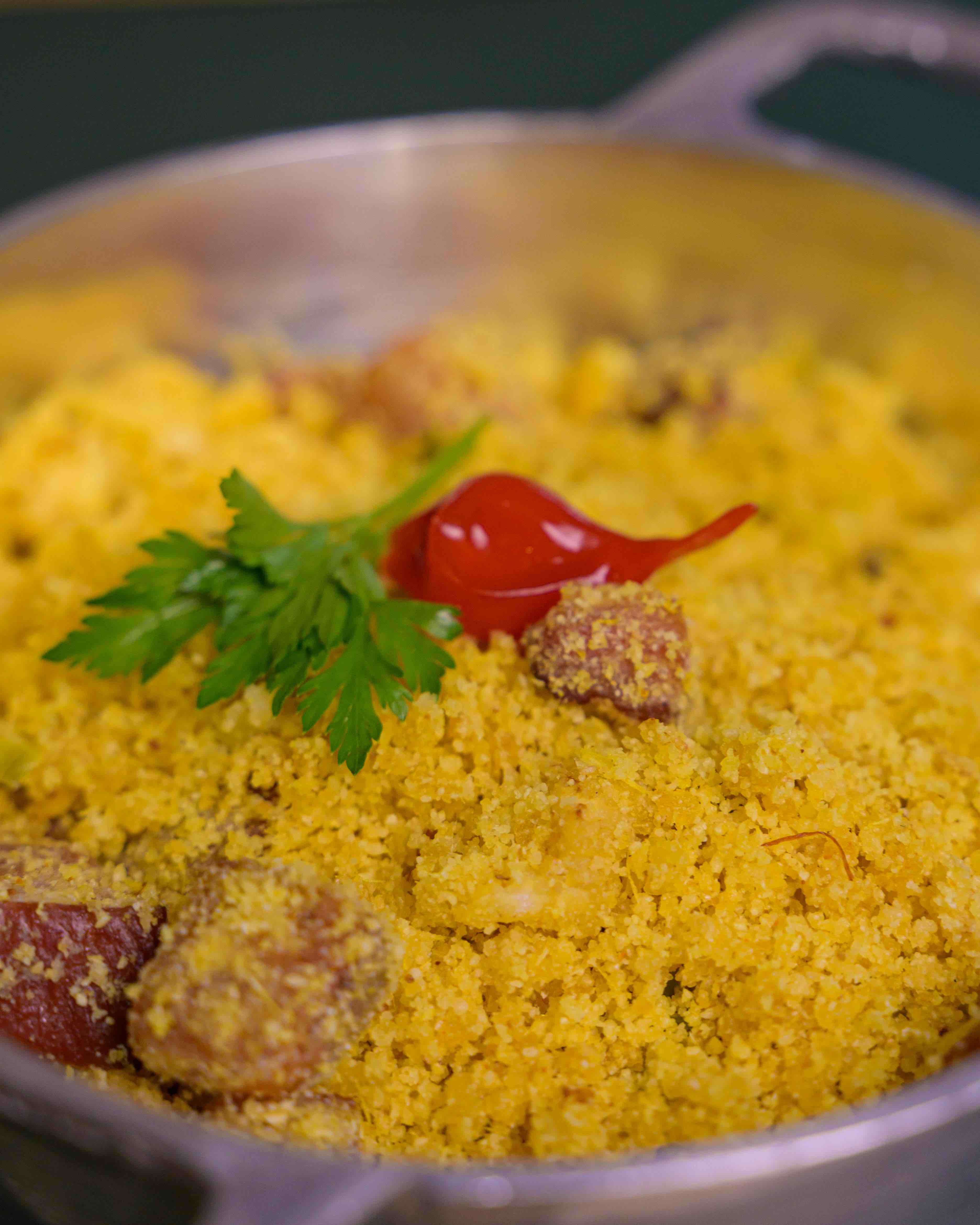
Brazilian Farofa with Bacon and Onions
Brazilian Farofa with Crispy Bacon and Sweet Onions
Brazil's beloved table condiment is pure alchemy — smoky bacon fat transforms humble cassava flour into something irresistible. Every grain gets toasty and golden while soaking up all those rich flavors, creating the perfect crunchy companion to just about everything.
Every Brazilian knows that no meal is complete without farofa, that golden, crunchy condiment that shows up on tables from São Paulo to Salvador. It's one of those dishes that seems almost too simple to matter — just toasted cassava flour mixed with whatever's handy — yet somehow manages to transform every bite of rice, beans, or grilled meat into something more satisfying.
The secret lies in the fat. Traditional farofa gets its soul from bacon drippings, butter, or even dendê oil, each one coaxing the bland cassava flour into nutty, golden perfection. This version leans into the smoky richness of bacon, letting those rendered drippings do the heavy lifting while sweet caramelized onions add depth and balance. The flour toasts slowly, grain by grain, until it reaches that perfect texture — crunchy but not hard, dry but not dusty.
What makes farofa so beloved isn't just its taste, but its versatility. Brazilians sprinkle it over feijoada, mix it into rice, or eat it straight from the pan while they cook. It's comfort food that doesn't need a special occasion, the kind of side dish that quietly makes everything else on the plate taste better.
Nutrition
Ingredients
- 6 slicethick-cut bacon, diced into small pieces
- 1 largelarge yellow onion, finely chopped
- 3 clovegarlic cloves, minced fine
- 2 cupcassava flour (farinha de mandioca)
- 2 largelarge eggs, hard-boiled and roughly chopped(optional)
- ¼ cupfresh flat-leaf parsley, finely chopped
- kosher salt
- freshly ground black pepper
Instructions
- Drop the diced bacon into a large skillet over medium heat and let it slowly render out its fat. You want the pieces crispy and golden, which takes about 8 minutes — resist the urge to rush this step since the rendered fat is liquid gold for the farofa.⏱ 8 min
- Use a slotted spoon to fish out the crispy bacon bits and set them aside on a plate. Leave all that beautiful bacon fat in the pan — it's about to do some serious flavor work.
- Toss the chopped onion into the hot bacon fat and let it cook until it turns a deep golden brown. This caramelization adds sweetness that balances the smoky bacon perfectly — give it a full 5 minutes.⏱ 5 min
- Stir in the minced garlic and cook just until it becomes fragrant and starts to sizzle. About a minute is all you need — any longer and it'll turn bitter.⏱ 1 min
- Turn the heat down to low and start adding the cassava flour gradually, stirring constantly as you go. This prevents clumping and ensures every grain gets coated with that flavorful fat.
- Keep stirring and toasting the flour mixture until it turns a beautiful golden color and smells nutty. This takes about 5 minutes of constant motion — the flour should look like coarse breadcrumbs and feel dry, not greasy.⏱ 5 min
- Fold the crispy bacon back into the pan along with the chopped eggs if you're using them. The eggs add richness and little pockets of creamy texture that contrast nicely with the crunch.
- Season with salt and pepper to taste, then fold in the fresh parsley. The herbs add a bright note that cuts through all that rich bacon flavor.
- Pull the skillet off the heat and serve immediately while the farofa is still warm and at its crunchiest. It'll stay good at room temperature for a while, but it's best right now.
Tips & Tricks
- Don't rush the bacon rendering — slow cooking over medium heat gives you more fat to work with and crispier pieces.
- Add the cassava flour gradually while stirring constantly to prevent lumps from forming in the hot fat.
- The flour is ready when it looks like coarse golden breadcrumbs and sounds different when you stir — more of a rustling than a wet sizzle.
- Taste and adjust salt carefully since bacon can vary wildly in saltiness.
- Farofa keeps well for days at room temperature, but reheat it briefly in a dry pan to restore the crunch.
Frequently Asked Questions
Can I make this without bacon?
Absolutely — use 3-4 tablespoons of butter or olive oil instead. You'll lose the smoky flavor but gain a nuttier, more neutral base that works beautifully with the caramelized onions.
What can I substitute for cassava flour?
Cassava flour (farinha de mandioca) is really what makes this farofa authentic, but fine breadcrumbs or even cornmeal can work in a pinch. The texture won't be quite the same, but you'll still get that satisfying crunch.
How do I know when the farofa is done?
The flour should be evenly golden and smell nutty, not raw or floury. It should look dry and separate easily when stirred — if it's clumping or looks greasy, keep cooking a bit longer.
Can I make this ahead of time?
Farofa actually improves after sitting for a few hours as the flavors meld. Store it covered at room temperature for up to 3 days, or refrigerate for a week.
What else can I add to farofa?
Brazilians add everything from diced bell peppers and tomatoes to raisins, nuts, or leftover meat. Fold in any additions during the last minute of cooking so they warm through without overcooking.