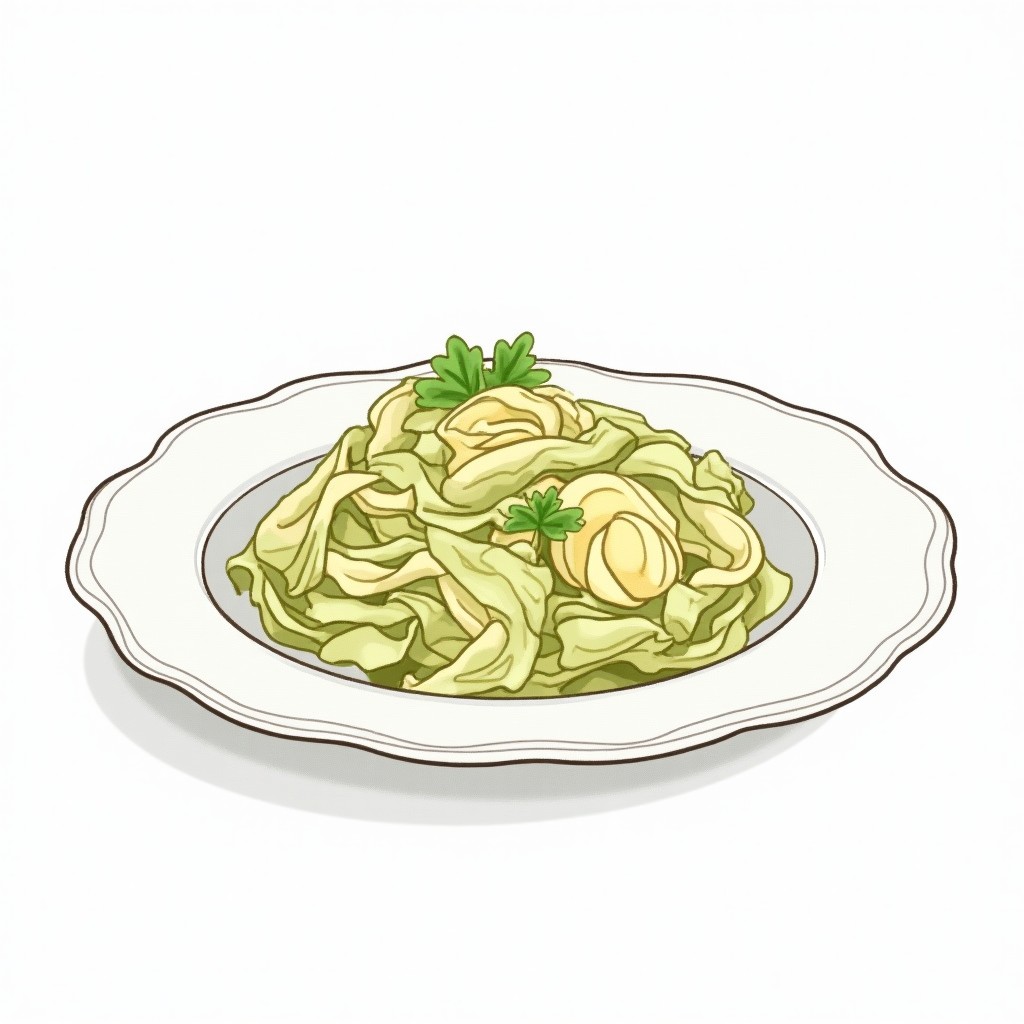
Braised Cabbage
Silky Butter-Braised Savoy Cabbage
Savoy cabbage becomes something completely different when it slow-cooks in its own steam and butter — the leaves turn silky and sweet, losing any trace of their raw bite. This simple technique brings out the vegetable's natural sugars while keeping every tender leaf intact.
Savoy cabbage looks delicate with its crinkled leaves and pale green color, but those ruffled edges hold incredible potential for transformation. Unlike its smooth-headed cousins, savoy has a natural tenderness that responds beautifully to gentle heat and time.
This braising technique is borrowed from classic French cooking, where vegetables simmer slowly in their own moisture until they reach an almost creamy consistency. The butter doesn't just add richness — it helps conduct heat evenly while the cabbage releases its natural juices. What starts as a pile of raw leaves becomes something entirely different: sweet, silky, and somehow both substantial and light.
The key is patience and low heat. Rush this process and you'll end up with limp, watery cabbage. Give it the full twenty minutes it needs, and you'll understand why this simple preparation has been a cornerstone of European cooking for generations. The cabbage practically melts while maintaining just enough structure to feel satisfying on the fork.
Ingredients
- 1 headsmall head savoy cabbage (about 2 pounds)
- 3 tbspunsalted butter
- fine sea salt
- 3 tbspwater
Instructions
- Peel away any wilted or damaged outer leaves from the cabbage head. Quarter it through the core, then slice out the tough white core from each piece. Chop the quarters into bite-sized pieces, keeping the natural leaf shapes where possible.
- Place butter in a large saucepan and melt over medium-high heat. Watch for the foaming to subside — this means the water has cooked off and you're ready for the cabbage.
- Add all the cabbage to the hot butter — it will seem like too much at first, but it shrinks quickly. Season with a generous pinch of salt, pour in the water, and stir everything together until the cabbage is coated.
- Cover the pan and turn heat down to medium-low. Let the cabbage braise gently, stirring every 5 minutes or so to prevent sticking. The leaves should cook down completely and absorb most of the liquid — they're done when they taste sweet and feel completely tender.⏱ 20 min
- Check the cabbage's doneness by tasting a piece — it should yield easily with no raw crunch. If it needs more time, add another 2 tablespoons water, cover again, and continue cooking until perfectly soft.
Tips & Tricks
- Don't skip removing the core — it stays tough even after long cooking and creates unpleasant chewy bits.
- The cabbage will look impossibly crowded in the pan at first, but resist the urge to use a bigger pot — you want it snug so it steams properly in its own moisture.
- If your pan starts getting dry and the cabbage begins to stick, add water one tablespoon at a time rather than dumping it all in at once.
- This keeps beautifully in the fridge for three days and actually improves as the flavors meld — reheat gently with a splash of water.
- Try stirring in a tablespoon of whole grain mustard or a squeeze of lemon juice just before serving for extra depth.
Frequently Asked Questions
Can I use regular green cabbage instead of savoy?
Regular cabbage works but takes longer to cook through — add 5-10 minutes to the braising time. Savoy's tender leaves are really ideal for this technique, so grab it if you can find it.
Why does my cabbage taste bitter even after cooking?
You likely cooked it too quickly or at too high heat. Cabbage needs gentle, slow cooking to convert its natural compounds into sugars. Try lowering the heat and extending the cooking time until it tastes sweet.
Can I make this dairy-free?
Absolutely — substitute olive oil or a neutral cooking oil for the butter. You'll lose some richness but gain a cleaner vegetable flavor that's quite nice in its own way.
How do I know when it's actually done?
The cabbage should have no raw crunch left and taste noticeably sweet rather than sharp. The leaves will be completely wilted and glossy, and most of the liquid should be absorbed into the cabbage itself.