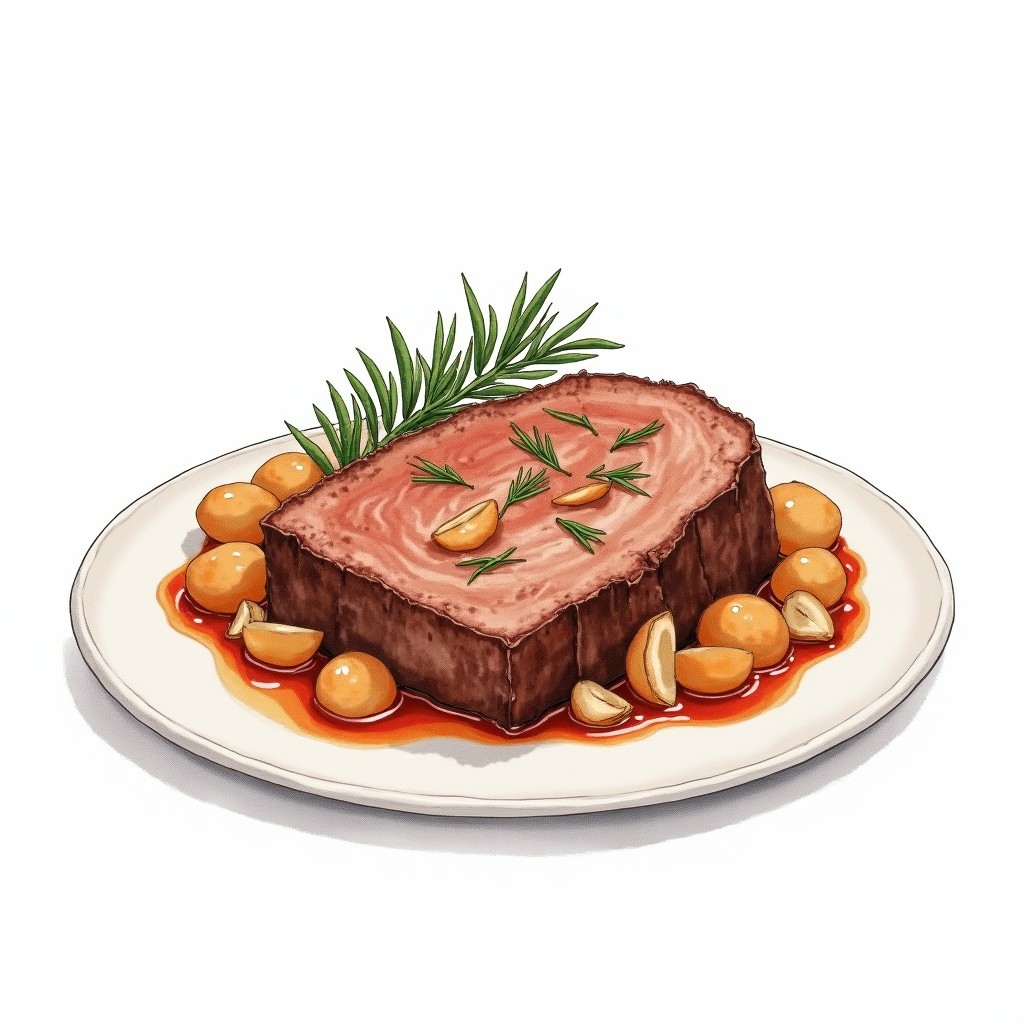
Braised Brisket
Red Wine Braised Brisket with Root Vegetables
This is brisket the way it was meant to be made — low and slow until it practically cuts with a fork. The meat bathes in red wine and aromatics for hours, developing layers of flavor that only patient braising can deliver. Better yet, it improves overnight, making it perfect for entertaining.
Brisket carries baggage in American kitchens. Too many cooks associate it with dried-out barbecue mistakes or tough, chewy disasters that end up in the trash. But this isn't Texas pit-smoking territory — this is European-style braising, where wine and time transform the meat's stubborn collagen into silky richness.
The magic happens slowly in that sealed foil tent, where steam and wine work together to break down muscle fibers that would otherwise resist your knife. Unlike quick-cooking cuts that punish you for overcooking, brisket rewards patience. Three and a half hours seems excessive until you taste what those hours accomplish — meat so tender it falls apart at the suggestion of pressure, surrounded by vegetables that have absorbed every drop of that wine-dark sauce.
What makes this version special is the overnight rest. Most braised dishes improve with time, but brisket takes it personally. That night in the refrigerator allows the meat to reabsorb its cooking liquid while the flavors marry and deepen. When you reheat it the next day, you're not just warming leftovers — you're serving a dish that has spent hours becoming better than it was.
Ingredients
- 5 lbbeef brisket, first-cut preferred
- 2 clovegarlic cloves, peeled and halved
- kosher salt
- freshly cracked black pepper
- 3 mediumyellow onions, cut into thick wedges
- 1 15-ounce candiced or crushed tomatoes
- 2 stalkcelery stalks with leaves, roughly chopped
- 1 fresh bay leaf
- 1 sprigfresh thyme sprig
- 1 sprigfresh rosemary sprig
- 2 cupdry red wine, like Cabernet or Merlot
- 7 carrots, peeled and cut into diagonal pieces
- ¼ cupfresh Italian parsley, roughly chopped
Instructions
- Set your oven to 300°F and let it fully preheat — this low temperature is crucial for breaking down the tough fibers without drying out the meat.
- Rub the brisket all over with the halved garlic cloves, really working them into the surface. Season generously with 2 teaspoons salt and 1 teaspoon pepper, then place fat-side up in a 9x13-inch baking dish. Scatter the onions, tomatoes, celery, bay leaf, thyme, and rosemary over and around the brisket. Pour the wine over everything — it should come about halfway up the sides of the meat. Cover tightly with heavy-duty foil, creating a good seal.
- Slide into the oven and braise for 3 hours, basting every 30 minutes with the accumulated juices. Each basting keeps the exposed surface moist and helps the flavors penetrate deeper. The liquid should be gently simmering, not boiling hard.⏱ 3 hrs
- Add the carrots and half the parsley to the dish, nestling them into the braising liquid. Remove the foil and continue cooking for 30 minutes more, until the carrots yield to a knife and the brisket shreds easily when probed with a fork.⏱ 30 min
- Let the brisket cool completely in its braising liquid — this prevents it from drying out and makes slicing much easier. Transfer to a cutting board, trim away any obvious fat, then slice against the grain into ¼-inch thick pieces. Look for the direction of the muscle fibers and cut perpendicular to them.
- Nestle the sliced brisket back into the dish with all the vegetables and sauce. Cover and refrigerate overnight — the flavors will meld and deepen, and any excess fat will solidify on top for easy removal.
- Remove any solidified fat from the surface, then reheat covered in a 350°F oven for 20 minutes until heated through. If the sauce seems thin, pour it into a saucepan and simmer over medium heat until it coats a spoon. Taste and adjust seasoning, then spoon over the brisket and sprinkle with the remaining parsley.⏱ 20 min
Tips & Tricks
- Look for a flat-cut brisket rather than the point cut — it slices more evenly and has a better meat-to-fat ratio for braising.
- Don't skip the overnight cooling step even if you're tempted to serve immediately; hot brisket will shred into strings when you try to slice it.
- Save time on reheating day by removing the solidified fat while it's cold — it peels off in satisfying sheets instead of mixing back into the sauce.
- If your braising liquid reduces too much during cooking, add hot beef broth rather than more wine to maintain the right balance.
- The grain in brisket can change direction partway through the cut, so check your knife angle as you slice to ensure you're always cutting perpendicular to the fibers.
Frequently Asked Questions
Can I use a different cut of beef for this recipe?
Chuck roast works well as a substitute, though it will cook faster — start checking for tenderness after 2.5 hours. Short ribs also work beautifully but will need the cooking time increased to 4 hours since they're thicker.
What if I don't have overnight to let it rest?
You can serve it the same day, but let it cool for at least 2 hours before slicing so the meat firms up enough to cut cleanly. The flavor won't be quite as developed, but it'll still be delicious.
Can I make this without wine?
Replace the wine with an equal amount of beef broth mixed with 2 tablespoons of red wine vinegar. You'll lose some depth of flavor, but the braising technique will still work perfectly.
Why is my sauce too thin after reheating?
Pour the sauce into a saucepan and simmer it down over medium heat until it coats the back of a spoon, about 5-10 minutes. You can also whisk in a tablespoon of tomato paste to thicken and add richness.