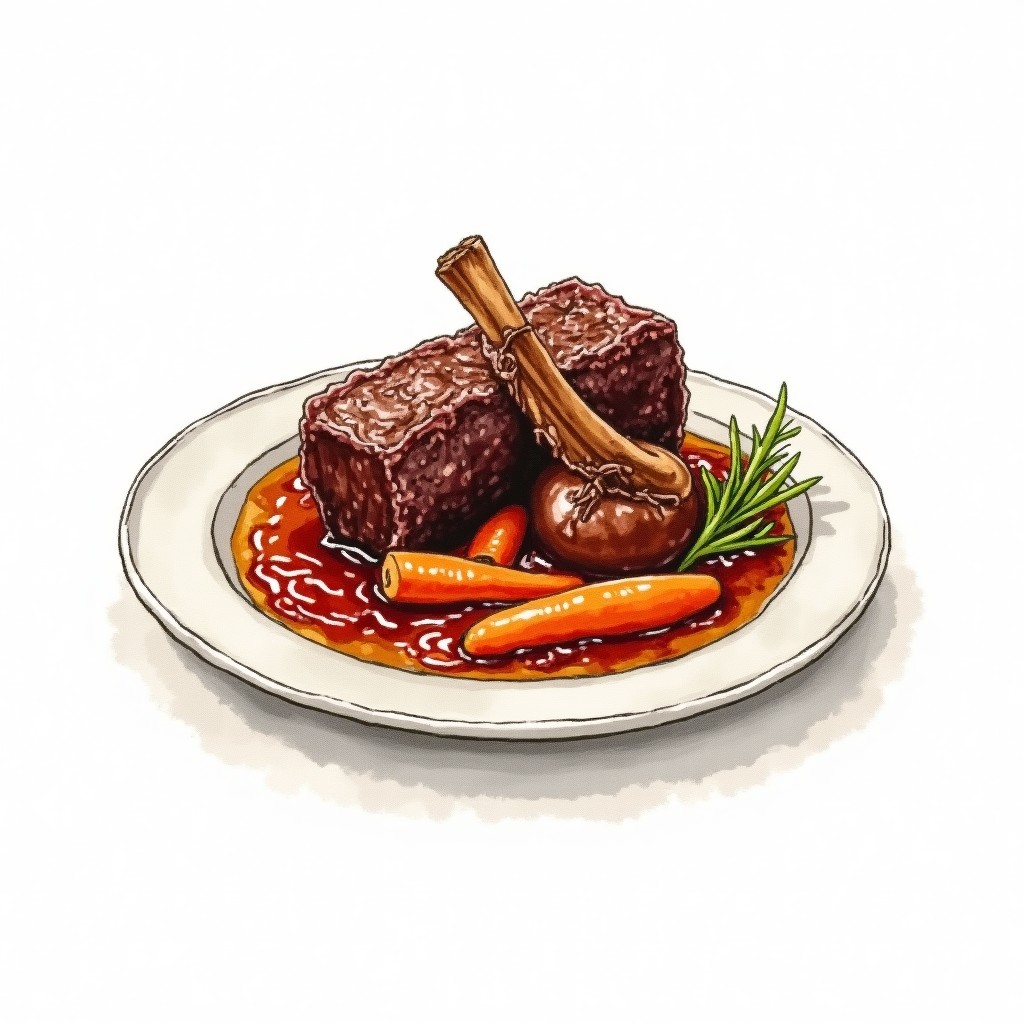
Braised Beef Short Ribs
Wine-Braised Short Ribs with Rich Pan Sauce
These meaty short ribs become ridiculously tender after a slow oven braise in red wine and aromatics. The cooking liquid transforms into a glossy, concentrated sauce that's worth every minute of the three-hour wait.
Short ribs occupy a unique place in the carnivore's hierarchy — they're one of those cuts that transforms completely through the alchemy of time and low heat. Raw, they're tough and sinewy, better suited for dog bones than dinner plates. But surrender them to a gentle three-hour braise, and they become something magnificent: falling-apart tender with a rich, wine-dark sauce that justifies every minute of waiting.
The technique here isn't complicated, but it is methodical. First comes the searing, which builds layers of flavor that will permeate the entire dish. Then the slow, covered braise in wine and aromatics, where tough collagen melts into silky gelatin and the meat gradually relaxes into submission. The braising liquid — initially thin and purple — concentrates into a glossy sauce with enough body to coat pasta or polenta.
This is the kind of cooking that rewards patience over speed, where the oven does the heavy lifting while you get on with your day. Set them in on a Sunday afternoon, and by evening you'll have a meal that tastes like you've been cooking professionally for decades. The only real skill required is resisting the urge to peek under the lid every thirty minutes.
Ingredients
- 5 bone-in beef short ribs, 300-400g each
- 1½ tspkosher salt
- 1½ tspfreshly ground black pepper
- 2 tbspolive oil
- 3 garlic cloves, crushed with flat knife
- 1 yellow onion, roughly chopped
- 2 celery ribs, cut into 1-inch pieces
- 2 carrots, cut into 1-inch pieces
- 2 tbsptomato paste
- 2 cupdry red wine, like Cabernet or Merlot
- 2 cupbeef stock or broth
- 2 fresh thyme sprigs(optional)
- 2 bay leaves
Instructions
- Set your oven to 160°C/325°F. This low temperature will slowly break down the tough connective tissue in the ribs without drying out the meat.
- Pat the short ribs completely dry with paper towels, then season generously on all sides with the salt and pepper. Don't be shy — these big pieces of meat need bold seasoning.
- Heat the olive oil in a heavy, ovenproof Dutch oven over high heat until it's shimmering. Working in batches to avoid crowding, sear half the ribs on all sides until deeply browned — about 7 minutes total. The browning creates flavor that'll enrich the entire braise.⏱ 7 min
- Transfer the first batch to a plate and brown the remaining ribs the same way, turning to develop color on every surface. Remove these to the plate as well.⏱ 7 min
- Lower the heat to medium and add the onion and garlic to the rendered fat. Let them sizzle and soften for about 2 minutes — you want the onion to start turning translucent.⏱ 2 min
- Stir in the carrots and celery, cooking them for 5 minutes until the carrots just begin to soften at the edges. They'll finish cooking during the long braise.⏱ 5 min
- Push the vegetables to one side and add the tomato paste to the cleared space. Let it cook and darken for a full minute — this concentrates its flavor and removes any raw taste.⏱ 1 min
- Pour in the wine and beef stock, then add the thyme and bay leaves. Stir everything together, scraping up any browned bits from the bottom of the pot — those are pure flavor. The tomato paste should dissolve completely into the liquid.
- Nestle the seared ribs back into the pot bone-side up. The liquid should come at least halfway up the sides of the meat — add more stock if needed to reach this level.
- Cover tightly with the lid and slide into the oven. Braise for 3 hours, checking once halfway through. The meat is ready when it pulls apart easily with a fork but still clings to the bone.⏱ 3 hrs
- Using tongs and a large spoon for support, carefully lift each rib from the braising liquid and arrange on a serving platter. Cover with foil to keep them warm while you finish the sauce.
- Strain the braising liquid through a fine-mesh sieve into a bowl, pressing the solids with the back of a spoon to extract every bit of flavor. Discard the solids and return the liquid to the pot.
- Bring the strained liquid to a simmer over medium-high heat. If it seems thin, let it reduce by about a third to concentrate the flavors. Taste and adjust the seasoning with salt and pepper as needed.
- Spoon the glossy sauce generously over the ribs before serving. The meat should be tender enough to cut with a fork, and the sauce rich enough to coat the back of a spoon.
Tips & Tricks
- Choose ribs that are well-marbled with fat and have the bone still attached — the bone adds flavor and helps the meat stay moist during the long braise.
- If your braising liquid reduces too much during cooking and the ribs start to look dry, add hot beef stock in half-cup increments to maintain the proper level.
- The sauce can be made glossier by whisking in a tablespoon of cold butter just before serving — this classic French technique adds richness and shine.
- Leftovers actually improve after a day in the refrigerator, as the flavors meld and any excess fat solidifies for easy removal.
- If you don't have a Dutch oven, use any heavy, oven-safe pot with a tight-fitting lid — even a deep roasting pan covered tightly with foil will work.
Frequently Asked Questions
Can I make these in a slow cooker instead?
Yes, but sear the ribs in a skillet first for better flavor. Transfer everything to your slow cooker and cook on low for 6-7 hours until fork-tender.
What wine should I use for braising?
Any dry red wine you'd drink works well — Cabernet Sauvignon, Merlot, or Côtes du Rhône are all good choices. Avoid cooking wines, which are too salty and harsh.
Why are my ribs still tough after 3 hours?
They likely need more time — some larger ribs can take up to 4 hours to become properly tender. The meat should practically fall off the bone when done.
Can I prepare this ahead of time?
Absolutely. The ribs can be braised up to 2 days in advance and stored in their cooking liquid. Reheat gently in a covered pot at 325°F for about 30 minutes.