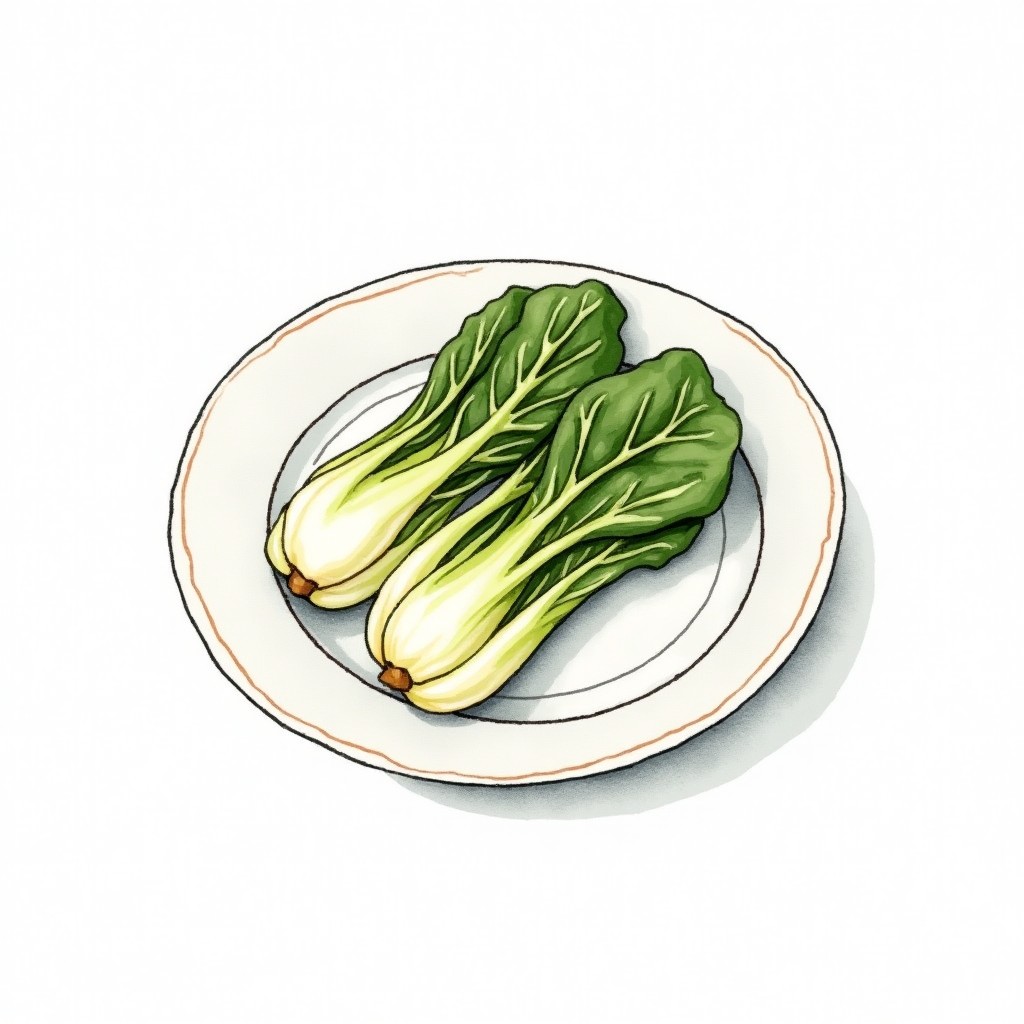
Bok Choy Namul
Quick-Blanched Bok Choy with Spicy Gochujang Sauce
Baby bok choy gets a flash blanching to preserve its crisp texture, then meets a glossy sauce where gochujang's fermented kick plays against sweet and savory notes. The whole dish comes together in minutes but delivers serious Korean flavors.
Bok choy deserves better than the soggy, overcooked fate it often meets in American kitchens. This Korean-inspired preparation treats the vegetable with the respect it commands — a lightning-quick blanch preserves its natural crunch while opening it up to absorb the bold gochujang sauce that follows.
The technique here is all about timing and temperature control. Twenty seconds in boiling water is just enough to take the raw edge off without compromising the satisfying snap that makes bok choy so appealing. The ice bath isn't optional — it locks in that bright green color and stops the cooking process dead in its tracks.
Gochujang brings its characteristic funky heat to this dish, but the real magic happens when it meets hot oil and builds into a glossy coating that clings to every leaf. The cornstarch slurry might seem like an extra step, but it transforms what could be a simple stir-fry into something restaurant-worthy. The sauce becomes part of the vegetable rather than just sitting on top of it.
Ingredients
- 2 headbaby bok choy
- 1 clovegarlic, minced
- 1 tbspgochujang
- 1 tbsppeanut oil
- 2 tspsoy sauce
- ½ tspsesame oil
- ½ tspsugar
- 1 tspcornstarch
- 1 tbspwater
- sesame seeds
Instructions
- Combine soy sauce, sugar, sesame oil, cornstarch, and water in a small bowl, whisking until the cornstarch dissolves completely. This sauce will thicken and coat the bok choy at the end.
- Trim the base of each bok choy head, then gently separate the leaves. Rinse them under cold water, paying attention to the base where dirt often hides.
- Drop the bok choy into boiling water for exactly 20 seconds — just long enough to brighten the color and soften slightly. Immediately plunge into an ice bath to stop the cooking.⏱ 20 sec
- Drain the bok choy thoroughly, pressing gently to remove excess water. Too much moisture will make the final dish watery.
- Combine minced garlic, gochujang, and peanut oil in your wok or large skillet, stirring to create a paste.
- Set the pan over medium heat and let the mixture warm gradually — rushing this will burn the garlic.
- Cook the gochujang mixture for 1-2 minutes until fragrant and the garlic just starts to sizzle. The gochujang should darken slightly but not smoke.⏱ 2 min
- Add the drained bok choy and toss constantly for 2-3 minutes, coating every leaf with the spicy mixture. The leaves should glisten with the gochujang.⏱ 3 min
- Give your cornstarch slurry a quick stir, then pour it over the bok choy. Toss everything together until the sauce thickens and clings to the leaves, adding 1-2 tablespoons water if needed for a light, glossy coating.
- Transfer to a serving plate and scatter sesame seeds over the top. Serve immediately while the bok choy still has some bite.
Tips & Tricks
- Don't skip the ice bath after blanching — room temperature water won't stop the cooking process fast enough.
- Press the blanched bok choy gently with paper towels to remove excess water, or your sauce will turn thin and watery.
- Warm the gochujang mixture gradually over medium heat to prevent the garlic from burning and turning bitter.
- Stir the cornstarch slurry right before adding it to the pan — cornstarch settles quickly and needs to be evenly mixed.
- This scales up easily for a crowd, but blanch the bok choy in batches to avoid overcrowding the pot.
Frequently Asked Questions
Can I use regular bok choy instead of baby bok choy?
Yes, but you'll need to adjust the cooking time. Cut regular bok choy into 2-inch pieces and blanch for 30-45 seconds instead of 20. The thicker stems need a bit more time to soften.
What can I substitute for gochujang if I can't find it?
Mix 1 tablespoon sriracha with 1 teaspoon miso paste and a pinch of brown sugar. It won't have the same fermented depth, but it'll give you heat and umami in the right direction.
How do I know when the bok choy is properly blanched?
The leaves should turn bright green and wilt slightly, but the stems should still have a firm bite when you test one. If they're completely soft, you've gone too far.
Can this be made ahead?
The blanched bok choy can be prepped a day ahead and stored in the fridge, but the final stir-fry should be done right before serving. Reheating turns the leaves mushy and dulls that vibrant color.