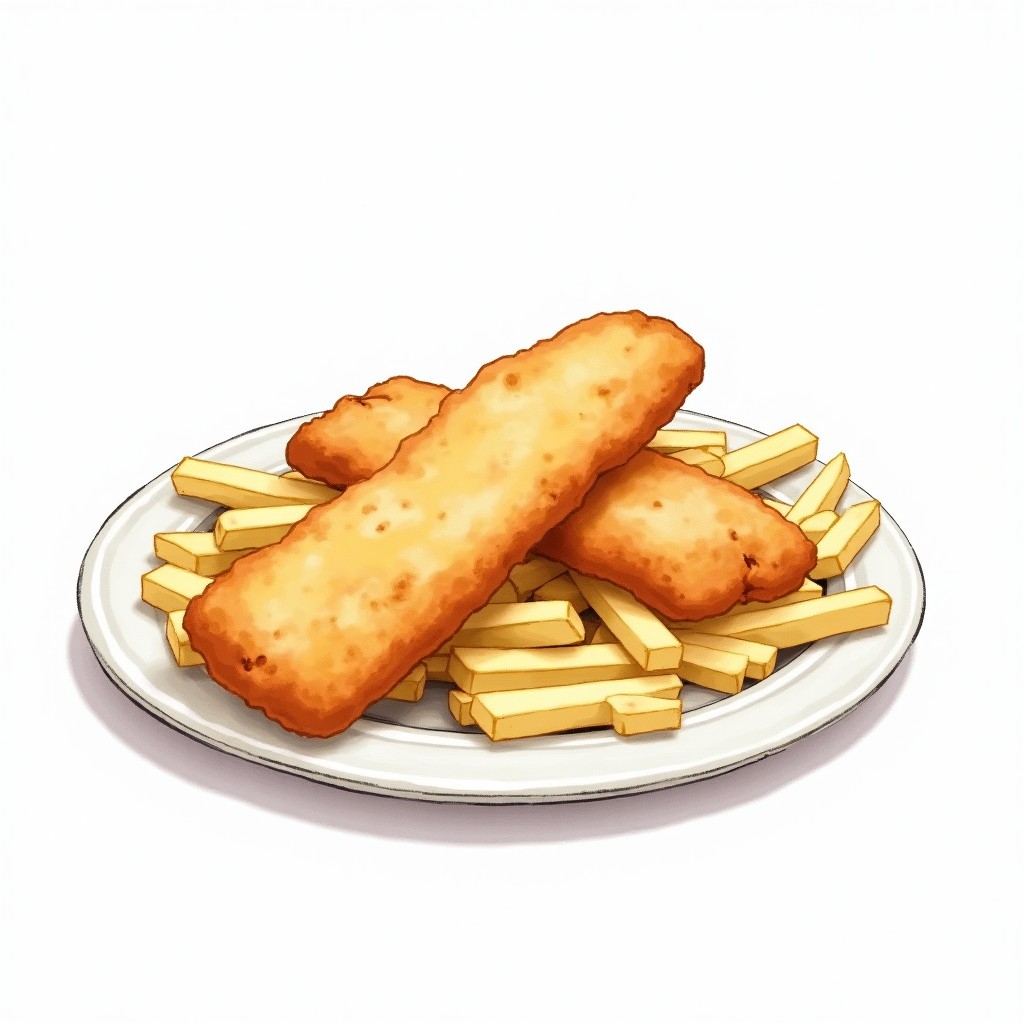
Beer Battered Fish and Chips
Classic Fish and Chips — Pub-Perfect Crispy Perfection
There's something magical about achieving that perfect shatter-crisp coating that gives way to flaky white fish inside. The secret lies in an ice-cold beer batter that puffs into golden armor around tender cod, while twice-fried chips emerge impossibly fluffy inside their crispy shells.
The first bite of proper fish and chips should sound like breaking glass — that sharp crack of batter giving way to steam and perfectly flaky fish underneath. It's a sound you hear across every seaside town and city chippy in Britain, but recreating it at home means understanding why this seemingly simple dish has defeated so many kitchen attempts.
The magic isn't in exotic ingredients or complicated techniques. It's in the physics: ice-cold beer batter meeting scorching oil creates those crucial steam pockets that puff the coating into golden armor. Meanwhile, your chips get their legendary contrast — crispy shell, fluffy interior — through a double-fry method that most home cooks skip. The potatoes cook through gently in the first round, then get their final crispy coating in the second.
Timing matters more than anything else here. Everything needs to come together hot and fast — the fish crackling from the oil just as the chips finish their second fry. There's no keeping things warm in the oven without losing that textural magic. But when you nail it, when that batter shatters at first bite and the fish inside is perfectly tender, you'll understand why this combination has remained unchanged for over a century.
Nutrition
Ingredients
Chips
- 2 lbrusset potatoes, peeled and cut into 1/2-inch thick fries
Fish
- 1½ lbcod or haddock fillets, skin removed, cut into 4-inch pieces
- ½ cupflour for dusting fish
Batter
- 1 cupall-purpose flour
- 1 cupcold beer (lager works best)
- 1 tspbaking powder
- 1 tspsalt
- 6 cupvegetable oil for deep frying
- 1 tspsalt for finishing
Instructions
- Fill a large, heavy-bottomed pot or deep fryer with oil and bring it to 350°F over medium-high heat. Use a thermometer to monitor — consistent temperature is everything for crispy results without greasy coating.⏱ 10 min
- Submerge your cut potatoes in a bowl of cold water and let them sit for 15 minutes to remove excess starch. Drain thoroughly and pat each fry completely dry with clean kitchen towels — any lingering water will cause dangerous oil splattering.⏱ 15 min
- Combine the flour, ice-cold beer, baking powder, and salt in a mixing bowl, whisking until you have a smooth batter with no lumps. The cold beer creates steam pockets that make the batter extra light and crispy when it hits the hot oil.
- Working in small batches to avoid crowding, fry the potatoes for 3-4 minutes until they're cooked through but still pale. Remove with a slotted spoon and spread on paper towels to drain — this first fry cooks the interior.⏱ 4 min
- Blot each piece of fish completely dry with paper towels, then dust lightly with flour on all sides. This flour layer helps the batter cling properly and creates an extra barrier against the oil.
- Dip each floured fish piece into the cold batter, letting any excess drip back into the bowl. You want a good coating but not so thick that it overwhelms the delicate fish inside.
- Carefully lower the battered fish into the oil, frying in batches for 4-5 minutes until the coating turns deep golden brown and sounds crispy when tapped with a fork. Don't overcrowd or the temperature will drop.⏱ 5 min
- While the fish drains, return the par-cooked chips to the oil for their second fry — 2-3 minutes until they're golden brown and crispy on the outside. This double-fry method creates the perfect contrast of crunchy exterior and fluffy interior.⏱ 3 min
- Transfer everything to fresh paper towels and immediately season with salt while still hot — the residual heat helps the salt stick. Serve right away while the coating is at its crispiest peak.
Tips & Tricks
- Pat your fish bone-dry before flouring — even a little moisture will make the batter slip off during frying.
- Keep your batter cold by using beer straight from the fridge and mixing it just before you're ready to fry.
- Don't skip the first fry on the chips — this par-cooking step is what creates the fluffy interior that makes proper chips different from regular fries.
- Test your oil temperature with a small drop of batter — it should sizzle immediately and rise to the surface without burning.
- Season everything the moment it comes out of the oil while the surfaces are still hot enough for salt to stick.
Frequently Asked Questions
Can I use a different type of fish?
Absolutely — haddock is traditional alongside cod, and both pollock and halibut work beautifully. Choose firm white fish that won't fall apart when battered, and avoid anything too delicate like sole.
What if I don't have beer for the batter?
Cold sparkling water works almost as well — you need the carbonation to create those light, crispy bubbles in the coating. Regular still water will give you a denser, less crispy result.
Can I make this without a deep fryer?
A heavy-bottomed pot with at least 3 inches of oil works perfectly. The key is maintaining steady temperature — use a thermometer and adjust your heat as needed to keep the oil at 350°F.
Why do my chips go soggy?
Usually it's because they weren't dried properly after the first fry, or the oil temperature dropped too low. Make sure to drain them well between fries and don't overcrowd the pot.
How do I know when the fish is done?
The batter will be deep golden brown and sound crispy when tapped with a fork — usually 4-5 minutes depending on thickness. The fish should flake easily when you test a piece with a knife.