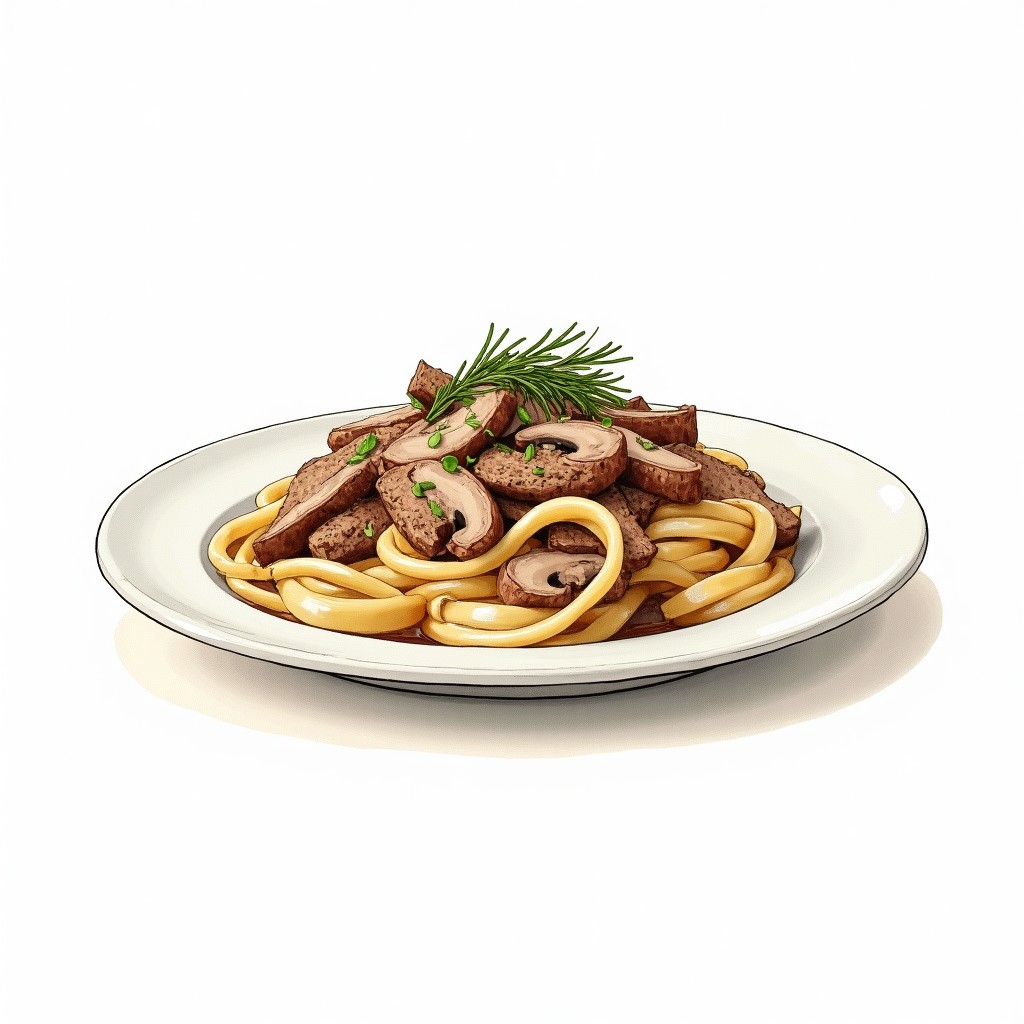
Beef Stroganoff
Classic Beef Stroganoff with Silky Sour Cream Sauce
Good stroganoff hinges on two things: perfectly seared beef that stays tender, and a sour cream sauce that doesn't curdle. This version nails both by cooking the beef just until browned, then finishing everything gently off the heat so the cream stays velvety smooth.
Most stroganoff recipes fail at the finish line — they get the beef right, build decent flavor, then turn their beautiful sauce into grainy cottage cheese the moment the sour cream hits hot liquid. The secret lies in temperature control and timing, treating that dairy like the delicate ingredient it actually is.
This isn't the gloppy, cream-of-mushroom version from your childhood cafeteria. True stroganoff emerged from 19th-century Russian kitchens where wealthy families demanded dishes that were both elegant and satisfying. The technique centers on quick-seared beef that stays tender and a sauce that walks the line between rich and light — substantial enough to coat pasta or potatoes, but refined enough for company.
The magic happens when you pull the pan off high heat before adding the sour cream, letting residual warmth create that glossy, restaurant-quality finish. Room temperature dairy, gentle folding, and restraint with the heat — these small details make the difference between amateur and accomplished.
Ingredients
- 5 tbspunsalted butter
- 1 lbtop sirloin or tenderloin, cut into 1x2.5-inch strips
- ⅓ cupshallots, finely chopped
- ½ lbcremini mushrooms, sliced 1/4-inch thick
- kosher salt
- freshly ground black pepper
- ⅛ tspfreshly grated nutmeg
- ½ tspdried tarragon
- 1 cupfull-fat sour cream, at room temperature
Instructions
- Heat 3 tablespoons of the butter in a large skillet over medium heat, then bump the heat to medium-high once it's melted. Arrange the beef strips in a single layer with breathing room between each piece — crowding will steam the meat instead of searing it. Let them brown undisturbed for 2-3 minutes, then flip and brown the other side. Season generously with salt and pepper, then transfer the beef to a bowl.
- Lower the heat back to medium and add the chopped shallots to the same pan, stirring them around in all those lovely browned bits. Cook just until they soften and turn translucent, about 1-2 minutes — you don't want them to brown. Transfer them to the bowl with the beef.⏱ 1 min 30 sec
- Add the remaining 2 tablespoons of butter to the pan and let it melt completely. Crank the heat back up to medium-high and add all the mushrooms at once. Resist the urge to stir for the first minute or two — let them develop some color. Then stir occasionally until they're golden and their liquid has mostly evaporated, about 4 minutes total. Sprinkle in the nutmeg and tarragon during the last 30 seconds.⏱ 4 min
- This is the crucial step: turn the heat down to low. Add the room-temperature sour cream to the mushrooms and stir gently but thoroughly to combine. The key here is never letting the mixture simmer or bubble — heat will cause the sour cream to curdle and break. Once it's smooth, fold in the beef and shallots along with any accumulated juices. Taste and adjust the seasoning with salt and pepper.
- Serve right away while it's steaming hot. This is fantastic spooned over wide egg noodles, fettuccine, creamy mashed potatoes, or even plain rice — whatever will soak up that luxurious sauce.
Tips & Tricks
- Cut the beef against the grain into strips no thicker than your thumb — thicker pieces won't cook evenly and thinner ones will overcook before browning.
- Room temperature sour cream is non-negotiable; cold dairy straight from the fridge will seize up and break when it hits the warm pan.
- Don't skip the nutmeg — just that tiny pinch adds warmth and depth that distinguishes good stroganoff from great stroganoff.
- If your sauce looks like it might curdle, immediately remove the pan from heat and whisk in a tablespoon of cold sour cream to bring the temperature down.
- The dish reheats beautifully over low heat with a splash of beef broth to loosen the sauce, making it perfect for meal prep.
Frequently Asked Questions
Can I use a different cut of beef?
Strip steak or ribeye work well, but avoid tougher cuts like chuck or round — they need longer cooking times that will make your sauce separate. Stick with tender cuts that cook quickly.
What if I only have low-fat sour cream?
Low-fat versions are much more likely to curdle because they lack the stabilizing fat content. If that's all you have, stir in a tablespoon of heavy cream to add richness and stability.
Can I make this ahead of time?
The beef and mushrooms can be cooked hours ahead, but add the sour cream only when ready to serve. Reheating dairy-based sauces is tricky and often leads to separation.
Why did my sauce break and look curdled?
The pan was too hot when you added the sour cream, or the dairy was too cold. Always reduce to low heat and use room-temperature sour cream to prevent this.