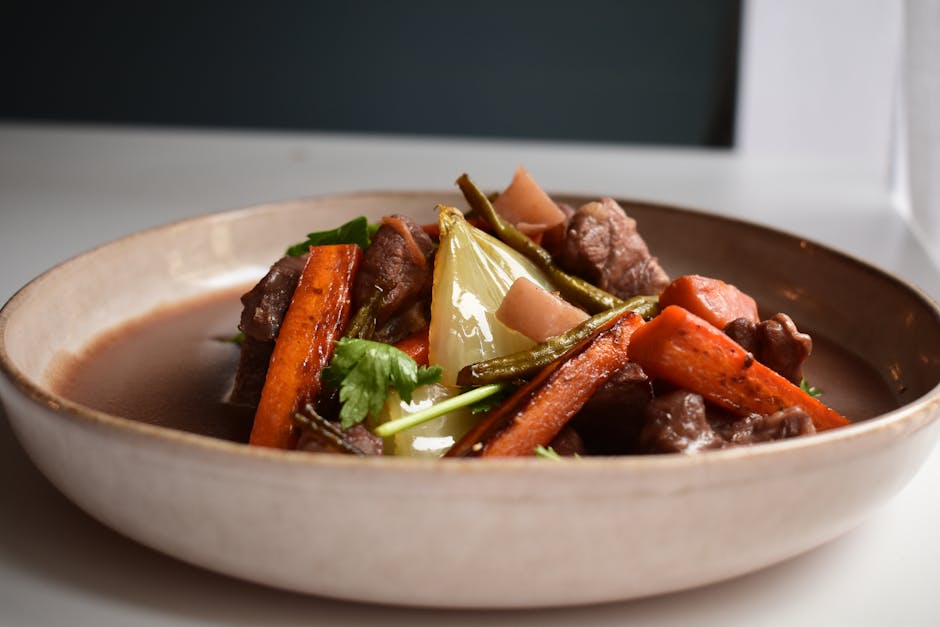
Beef Bourguignon
Classic French Beef Bourguignon
This timeless Burgundian masterpiece transforms humble beef into something extraordinary through the magic of slow braising in red wine. The result is melt-in-your-mouth beef surrounded by a rich, velvety sauce that's worth every minute of patience. It's the kind of dish that fills your kitchen with intoxicating aromas and makes you feel like a true chef.
Burgundy's winters are long and cold, which explains why the region's cooks became masters of turning tough, inexpensive cuts into dishes that could warm both body and soul. Beef bourguignon emerged from this practical necessity sometime in the Middle Ages, when local cooks discovered that braising beef slowly in their regional wine created something far greater than the sum of its parts. The alcohol cooks off, leaving behind concentrated fruit flavors that meld with the beef's natural juices to create a sauce that's both complex and deeply satisfying.
The secret to exceptional bourguignon lies in patience and proper technique. Each step builds layers of flavor — the rendered bacon fat, the caramelized vegetables, the wine reduction — that combine during the long, gentle braise. Professional chefs often prepare this dish a day ahead because the flavors deepen and improve with time, much like the wine that goes into it.
While Julia Child introduced many Americans to this dish, authentic bourguignon remains refreshingly straightforward. There's no need for exotic ingredients or complicated techniques, just good beef, decent wine, and the willingness to let time work its magic. The result justifies every minute spent: tender beef that practically melts on your fork, surrounded by vegetables that have absorbed all those rich, wine-infused flavors.
Nutrition
Ingredients
- 1 tbspextra-virgin olive oil
- 6 ozthick-cut bacon, roughly chopped
- 3 lbbeef brisket, well-trimmed and cut into 2-inch chunks
- 1 largelarge carrot, sliced into 1/2-inch rounds
- 1 largelarge white onion, diced
- 6 clovegarlic cloves, minced
- coarse salt
- freshly ground black pepper
- 2 tbspall-purpose flour
- 12 small pearl onions, peeled(optional)
- 3 cupdry red wine, preferably Burgundy or Pinot Noir
- 2 cuprich beef stock
- 2 tbsptomato paste
- 1 beef bouillon cube, crushed
- 1 tspfresh thyme, finely chopped
- 2 tbspfresh parsley, finely chopped
- 2 bay leaves
- 1 lbwhite button mushrooms, quartered
- 2 tbspunsalted butter
Instructions
- Preheat your oven to 350°F. This gentle heat will work its magic slowly, breaking down the tough connective tissue in the beef into silky gelatin.
- Heat the olive oil in your heavy dutch oven over medium heat. Add the chopped bacon and let it render slowly, stirring occasionally, until it's deeply golden and crispy. You'll hear it sizzle and pop as the fat renders out, filling your kitchen with that irresistible smoky aroma.⏱ 3 min
- Using a slotted spoon, transfer the crispy bacon to a large dish, leaving behind that precious rendered fat. This golden elixir will be the foundation of our flavor.
- Pat each piece of beef completely dry with paper towels — this is crucial for achieving a beautiful sear. Working in batches to avoid overcrowding, sear the beef chunks in the hot bacon fat until deeply browned on all sides. Don't rush this step; let each side develop a rich, caramelized crust before turning. Transfer the seared beef to the dish with the bacon.
- In the remaining fat, sauté the carrots and diced onions until they begin to soften and take on a golden hue. Add 4 cloves of minced garlic and cook just until fragrant, about 1 minute — be careful not to let it burn.⏱ 4 min
- Drain off all but 1 tablespoon of fat from the pot. Return the bacon and beef to the dutch oven, then season generously with salt and pepper. Sprinkle the flour over everything and toss well to coat. Cook, stirring frequently, until the flour is lightly browned and no longer looks raw.⏱ 5 min
- Add the pearl onions if using, then pour in the red wine — it should sizzle dramatically as it hits the hot pot. Add enough beef stock to barely cover the meat. Stir in the tomato paste, crushed bouillon cube, thyme, parsley, and bay leaves. Bring the mixture to a gentle simmer, watching as the wine mingles with the other flavors.
- Cover the pot with its lid and transfer to the preheated oven. Let it braise slowly for 2 to 3 hours, until the beef is so tender it practically falls apart when touched with a fork. The long, gentle cooking will transform the tough brisket into something sublime.⏱ 3 hrs
- About 30 minutes before the beef is done, prepare the mushrooms. Heat butter in a large skillet over medium heat. When the foaming subsides, add the remaining 2 cloves of minced garlic and cook until fragrant. Add the quartered mushrooms and cook, shaking the pan occasionally, until they're golden brown and have released most of their moisture. Season with salt and pepper.⏱ 5 min 30 sec
- Place a colander over a large pot to catch the precious braising liquid. Remove the dutch oven from the oven and carefully empty its contents into the colander, separating the solids from the sauce. Fish out and discard the bay leaves — their job is done.
- Return the beef mixture to the dutch oven and top with the golden sautéed mushrooms. The colors should be rich and inviting — deep browns and burnished golds.
- Pour the collected sauce into a saucepan and skim off any fat that rises to the surface. Bring to a simmer and continue skimming — this step ensures a silky, restaurant-quality finish.⏱ 2 min
- Adjust the sauce consistency to your liking: if it's too thick, whisk in a bit more stock; if too thin, let it boil over medium heat until it reduces and coats the back of a spoon. This is where your chef's intuition comes into play.⏱ 10 min
- Taste the sauce and adjust the seasoning — it should be rich, wine-forward, and deeply satisfying. Pour the perfected sauce over the meat and vegetables, watching as it pools around the tender beef.
- If serving immediately, return the pot to the stovetop and simmer gently for 2-3 minutes to marry all the flavors. Garnish with fresh parsley for a bright pop of color against the rich, dark stew.⏱ 3 min
Tips & Tricks
- Use a wine you'd actually drink — the 'cooking wine' rule applies here since the alcohol reduces but the flavor concentrates.
- Don't skip drying the beef thoroughly before searing; moisture prevents proper browning and you'll miss that crucial caramelized flavor foundation.
- If your sauce seems too thin at the end, mix a tablespoon of cold butter with a tablespoon of flour and whisk it in while simmering.
- Make this a day ahead if possible — the flavors marry beautifully overnight and reheating is simple.
- Save time by searing the beef and sautéing vegetables the night before, then assembling and braising the next day.
Frequently Asked Questions
Can I use a different cut of beef instead of brisket?
Chuck roast works beautifully and is often easier to find. Short ribs add even more richness but increase the cooking time slightly. Avoid lean cuts like sirloin — they'll dry out during the long braise.
What if I don't have a Dutch oven?
Any heavy-bottomed oven-safe pot with a tight lid will work, or transfer everything to a covered casserole dish after browning. The key is even heat distribution and a good seal to prevent moisture loss.
How do I know when the beef is properly tender?
The beef should break apart easily when pressed with a fork — no cutting required. If it's still firm after 2.5 hours, give it another 30-45 minutes. Tough cuts need time to break down completely.
Can I freeze leftovers?
Yes, it freezes beautifully for up to 3 months. The sauce may separate slightly when thawed, but a gentle simmer and stir will bring it back together perfectly.