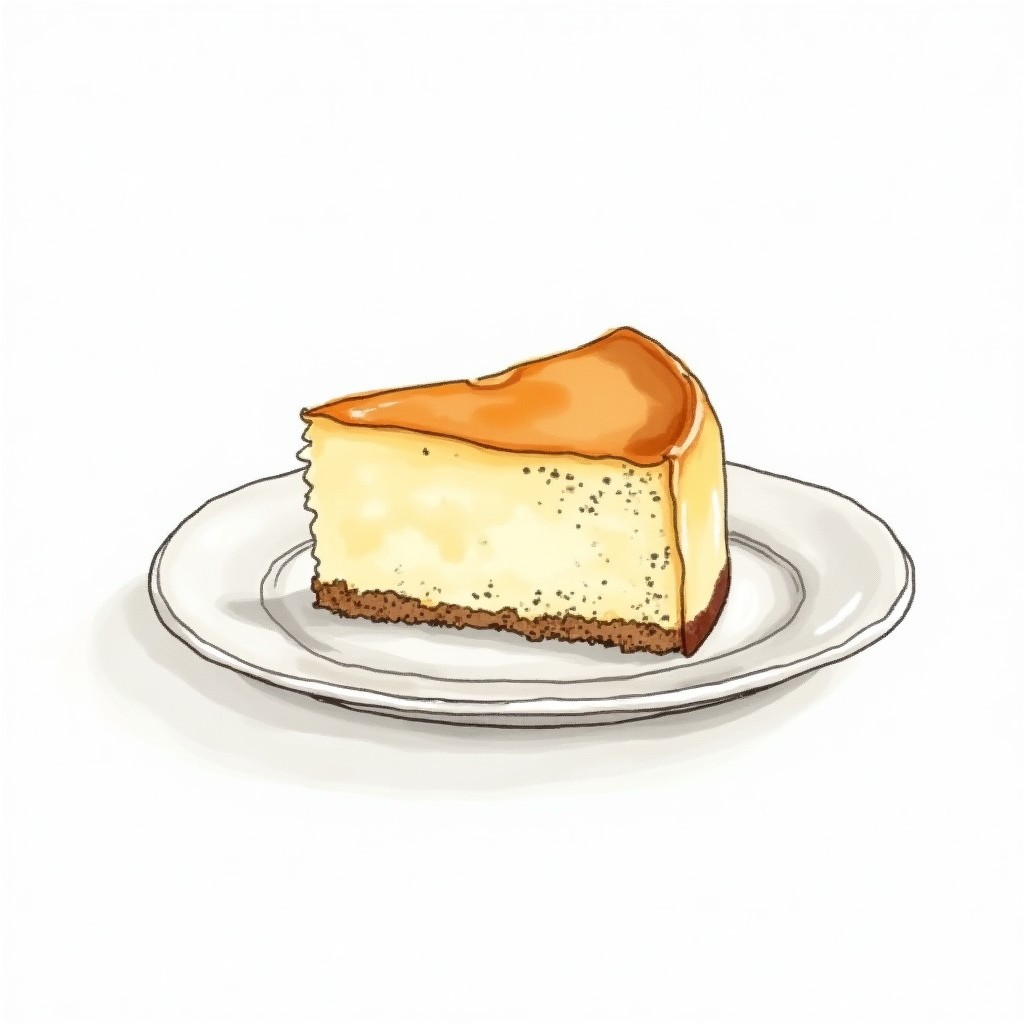
Basque Cheesecake
San Sebastián Burnt Cheesecake
This Spanish-style cheesecake deliberately courted its signature blackened top through high-heat baking that caramelizes the surface while keeping the center impossibly silky. The result defies everything you think you know about cheesecake — no crust, no water bath, just pure creamy indulgence with a dramatic burnt crown that tastes far better than it looks.
Most cheesecakes spend their lives trying to avoid cracks and maintain that pristine, pale surface — but this Basque beauty throws all those rules out the window. Born in the 1990s at La Viña, a tapas bar in San Sebastián, this cheesecake was practically an accident. The chef baked his cheesecake at such high heat that it emerged from the oven dramatically blackened, and instead of tossing it, he served it anyway. Customers were enchanted.
The magic lies in that seemingly catastrophic burn. The intense heat caramelizes the sugars on the surface, creating a bittersweet crown that balances the rich, almost molten interior. Without a crust to provide structure, the filling sets up more like a cross between cheesecake and crème brûlée — dense enough to slice but creamy enough that it practically melts on your tongue. The contrast between the bitter-edged top and the sweet, tangy center is what makes each bite so compelling.
This isn't a cheesecake that requires finesse or perfection. The cracks that form as it cools are part of its rustic charm, and the deflation that happens is exactly what's supposed to occur. It's dessert-making at its most liberating — the worse it looks, the better you've probably done it.
Ingredients
- 2 lbfull-fat cream cheese, room temperature
- 1½ cupgranulated sugar
- 5 largelarge eggs, room temperature
- 1 tspvanilla extract
- 1¾ cupheavy cream
- 1 tspfine sea salt
- ¼ cupall-purpose flour
Instructions
- Get your oven cranked to 400°F — this aggressive temperature is what creates the burnt top we're after. Generously butter a 9-inch springform pan, getting into all the corners.
- Line your pan with two sheets of parchment paper, pressing them into the bottom and up the sides with at least 2 inches hanging over the rim. Butter between the layers so they won't separate during baking — this overhang is crucial for getting a clean release later.
- Beat the cream cheese and sugar together on medium-low speed until completely smooth with no lumps remaining. Don't rush this step — lumpy cream cheese will stay lumpy in the final cake.
- Add the eggs one by one on low speed, letting each one fully incorporate before adding the next. Stir in the vanilla until just combined — overmixing now can make the texture dense.
- With the mixer on low, slowly drizzle in the heavy cream until smooth. Sift the flour and salt directly over the mixture, then fold everything together gently by hand until no streaks remain.
- Pour the batter into your prepared pan and bake for 60-65 minutes until the top is deeply caramelized and almost black — don't panic, this is exactly what you want. The center should still have a gentle wobble when you shake the pan.⏱ 1 hr 5 min
- Let the cheesecake cool completely at room temperature for about an hour — it will deflate and crack as it cools, which is perfectly normal. Remove from the pan or chill until set if you prefer a firmer slice.⏱ 1 hr
Tips & Tricks
- Room temperature ingredients are non-negotiable here — cold cream cheese will leave you with lumps that won't smooth out no matter how long you beat the mixture.
- Don't worry if the top looks almost black and the center still jiggles when you pull it from the oven — that wobble will set as it cools, and the burn is what gives this cheesecake its signature flavor.
- The parchment paper overhang acts like handles for easy removal, but make sure to butter between the layers or they'll separate when you try to lift the cake out.
- This actually improves after a day in the fridge — the flavors meld and the texture becomes even more luxurious, though it's delicious at room temperature too.
- Sift the flour directly over the mixture rather than adding it all at once to prevent pockets of flour from forming in the batter.
Frequently Asked Questions
Can I make this without a springform pan?
Yes, but use a regular 9-inch cake pan lined heavily with parchment paper with long overhangs. You'll need those paper handles to lift the whole cake out since you can't remove the sides like with a springform.
Why is my cheesecake not getting burnt on top?
Your oven might be running cool, or you're not baking it long enough. The top should look almost black and smell deeply caramelized — if it's just golden after 65 minutes, keep going until it's properly burnt.
Is it supposed to crack and deflate this much?
Absolutely — the dramatic cracks and deflation are signs you've done it right. Unlike traditional cheesecakes where cracks are failures, here they're part of the rustic appeal and indicate proper baking.
How long will this keep?
It'll stay good in the fridge for up to 5 days, and honestly gets better after the first day as the flavors develop. Serve it chilled or let it come to room temperature for a softer texture.